Table of Contents
Eliminating Data Silos: Building Bi-Directional System Sync
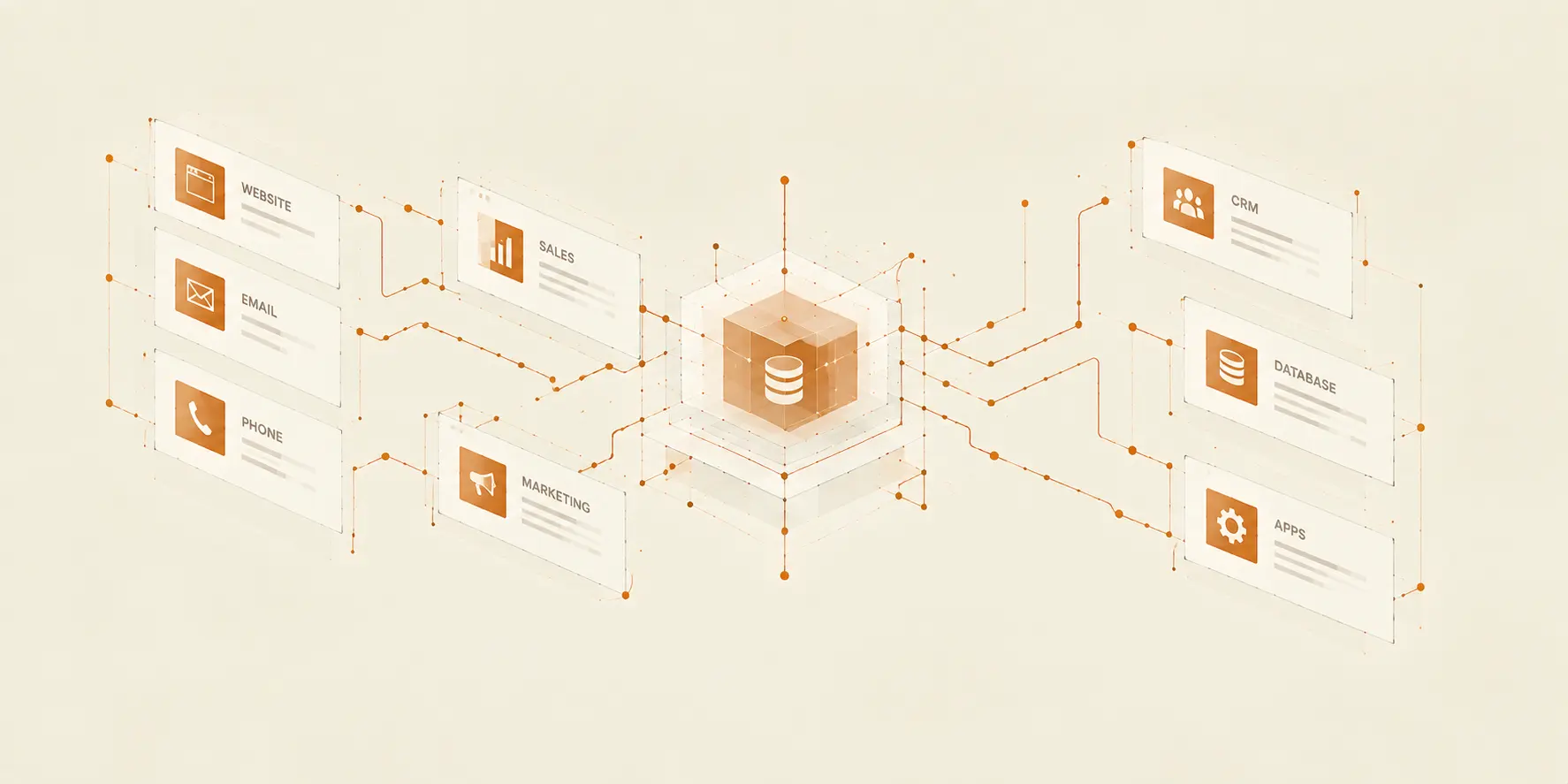
As companies scale, their software ecosystems naturally diversify. Marketing uses one platform, sales operates out of a CRM, finance relies on accounting software, and fulfillment relies on an ERP or custom operational portal. Without unified integration, these tools quickly form isolated data silos. When information lives in disconnected databases, teams waste hours manually updating records, dealing with conflicting customer profiles, and making critical decisions based on outdated information.
Establishing true operational harmony across your tech stack requires moving past basic one-way exports and adopting robust, bi-directional system synchronization. When data flows seamlessly both ways across platforms in real time, every department operates from a single, reliable source of truth.
01 — The High Hidden Cost of Disconnected Systems
Operating with isolated data silos introduces severe operational risks and administrative overhead that compound as transaction volume grows.
- Duplicate Data & Inconsistencies: Manual entry across multiple portals inevitably produces conflicting records, missing fields, and outdated contact details.
- Friction Between Departments: Sales reps lack visibility into active invoice statuses or fulfillment delays, leading to misaligned client conversations.
- Costly Administrative Waste: Team members spend valuable hours exporting CSV files and manually copying records between platforms instead of focusing on high-value strategy.
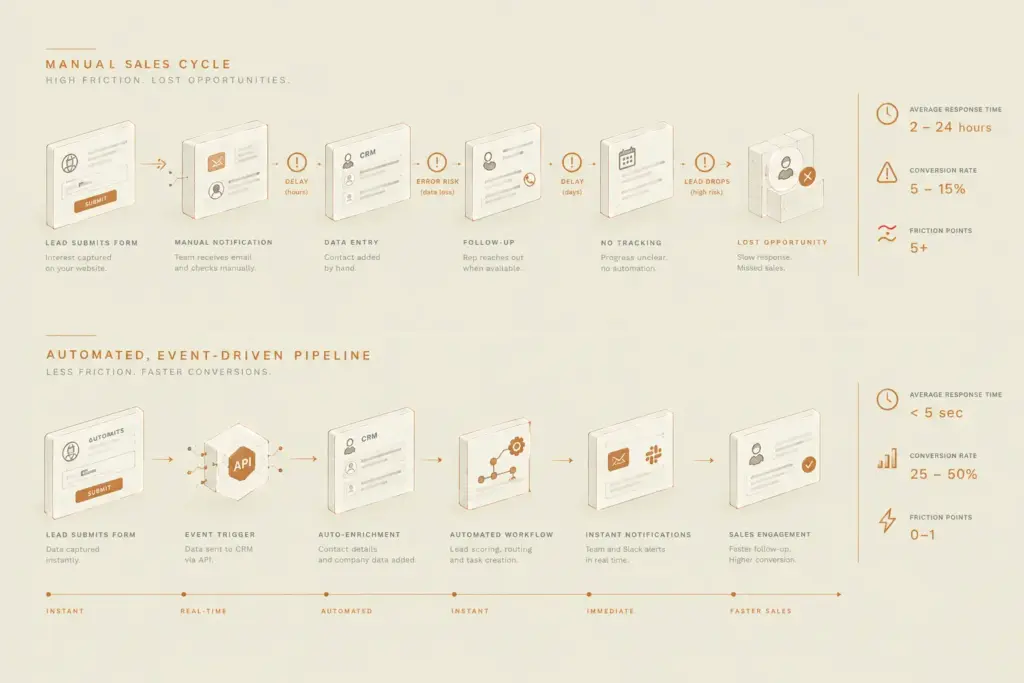
“Disconnected software tools force human teams to act as manual data bridges. Bi-directional synchronization turns your tech stack into a single cohesive asset.”
02 — Pillars of Reliable Bi-Directional Synchronization
Architecting a stable two-way data sync demands careful planning around conflict resolution, API rate limits, and field mapping protocols.
1. Automated Webhooks and Event Listeners
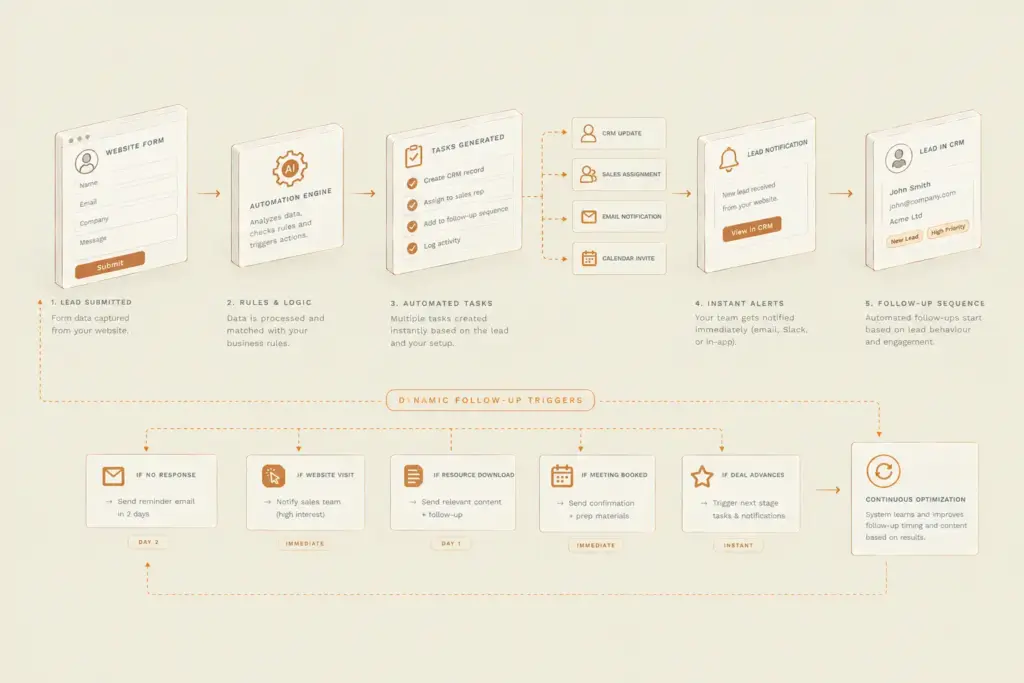
Rather than relying on scheduled batch imports that create data delay, custom webhooks listen for real-time state changes (e.g., deal closed, invoice paid, contact updated) and instantly propagate changes across all connected platforms.
2. Deterministic Conflict Resolution Logic
When records update simultaneously in two different systems, pre-defined rules must determine which system holds primary authority based on field type or timestamp precedence to prevent data overwrites.
3. Standardized ID Mapping & Deduplication
Map unique system identifiers (e.g., CRM Contact ID to ERP Account Number) to ensure records pair accurately without creating duplicate profiles during updates.
03 — Transformative Benefits of Integrated Architecture
Unifying your business platforms with bi-directional system sync unlocks significant operational efficiency across all functional areas:
- A Single Source of Truth: Every department accesses real-time, accurate customer, transaction, and inventory data directly within their primary working interface.
- Enhanced Customer Experience: Client-facing teams gain immediate, full-spectrum context on account history, pending orders, and billing status during live interactions.
- Seamless Scalability: Add or update specialized software modules in your stack without breaking core operational data flows or risking historical data loss.
04 — Unifying Your Enterprise Tech Ecosystem
Sustainable enterprise growth relies on connected systems that mirror the fluid reality of your business. By building robust bi-directional integrations across your CRM, financial tools, and operational platforms, your business eliminates data friction, restores operational visibility, and establishes a foundation built to scale.
Unify Your Tech Ecosystem
Stop letting isolated data silos fragment your customer intelligence. Explore our CRM integration services
and learn how our tailored digital solutions connect your CRM, financial software, and operational tools into a seamless, real-time data network.