Table of Contents
Building Scalable API Architectures for Modern CRM Systems
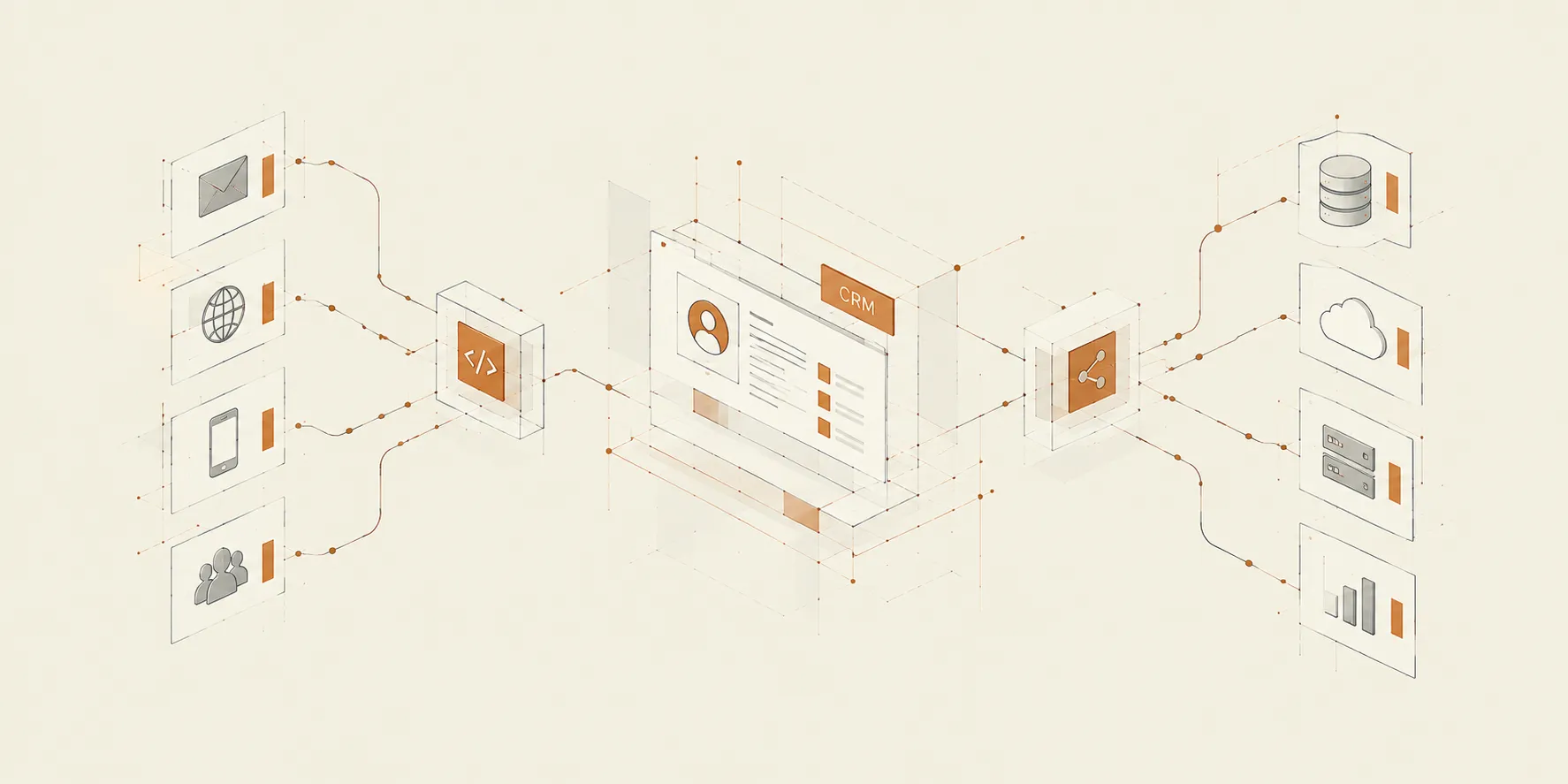
As organizations scale, the volume of data moving into and out of their Customer Relationship Management (CRM) platform increases exponentially. Marketing webhooks, transactional email events, payment gateway updates, and third-party SaaS tools constantly trigger read and write operations. Without a robust, modern API architecture, high request volumes lead to rate-limit throttling, dropped webhook payloads, latency spikes, and system downtime.
Building an enterprise-grade CRM integration requires designing a resilient API infrastructure built for high throughput and fault tolerance. By implementing middleware queueing, rate-limit handling, and robust payload authentication, businesses ensure their CRM remains fast, responsive, and completely reliable—even during peak operational bursts.
01 — Structural Vulnerabilities of Legacy API Connections
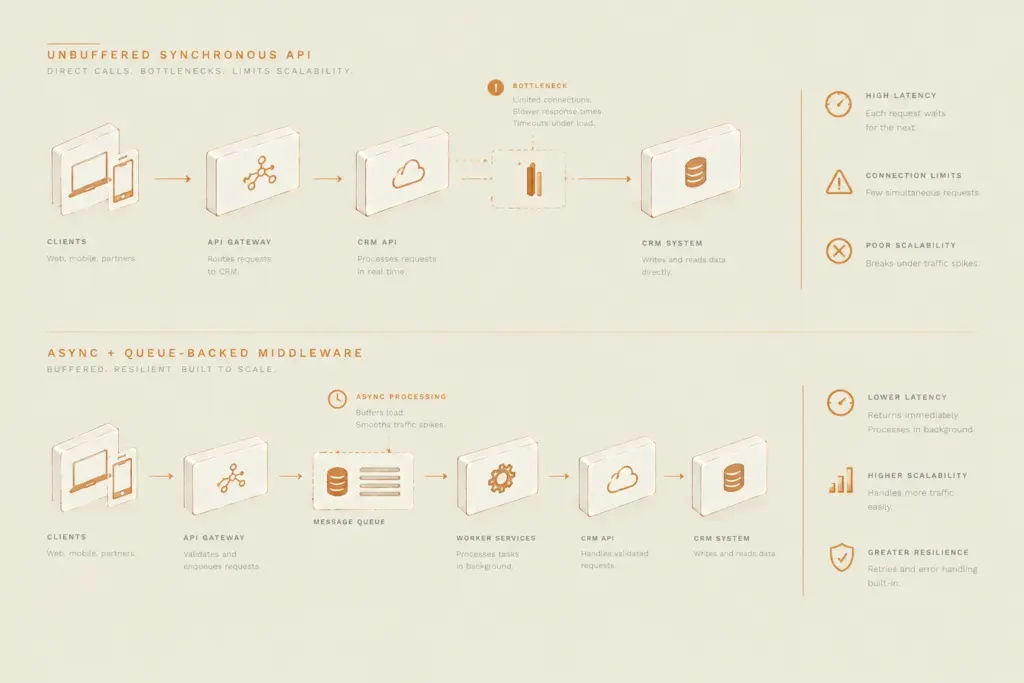
Relying on direct, unbuffered API calls between external frontends and core CRM databases creates critical points of failure as request volumes scale.
- API Throttling & Blown Rate Limits: Direct, unmanaged HTTP requests hit strict CRM vendor quotas during peak traffic, causing missed leads and sync errors.
- Dropped Webhooks & Unhandled Exceptions: Standard synchronous webhooks lack automated retry mechanisms; if your CRM endpoint undergoes maintenance, incoming data is permanently lost.
- Database Monolith Bottlenecks: Heavy real-time reporting queries run directly on primary CRM tables can slow down the interface for daily active sales representatives.
“An API integration is only as strong as its fallback mechanism. Scalable architectures don’t just handle success—they gracefully absorb and recover from system bursts and network failures.”
02 — Pillars of a High-Performance CRM API Architecture
Architecting a future-proof CRM middleware pipeline requires decoupling data ingestion from execution using modern event-driven design patterns.
1. Asynchronous Message Queueing (e.g., Redis / RabbitMQ)
Buffer incoming webhook events instantly into high-speed memory queues before executing database operations. This decouples payload reception from database writing, eliminating HTTP timeouts.
2. Adaptive Rate Limiting & Backoff Mechanics
Implement intelligent rate-limit orchestrators that track CRM API call thresholds in real time, automatically slowing or batching request bursts using exponential backoff algorithms.
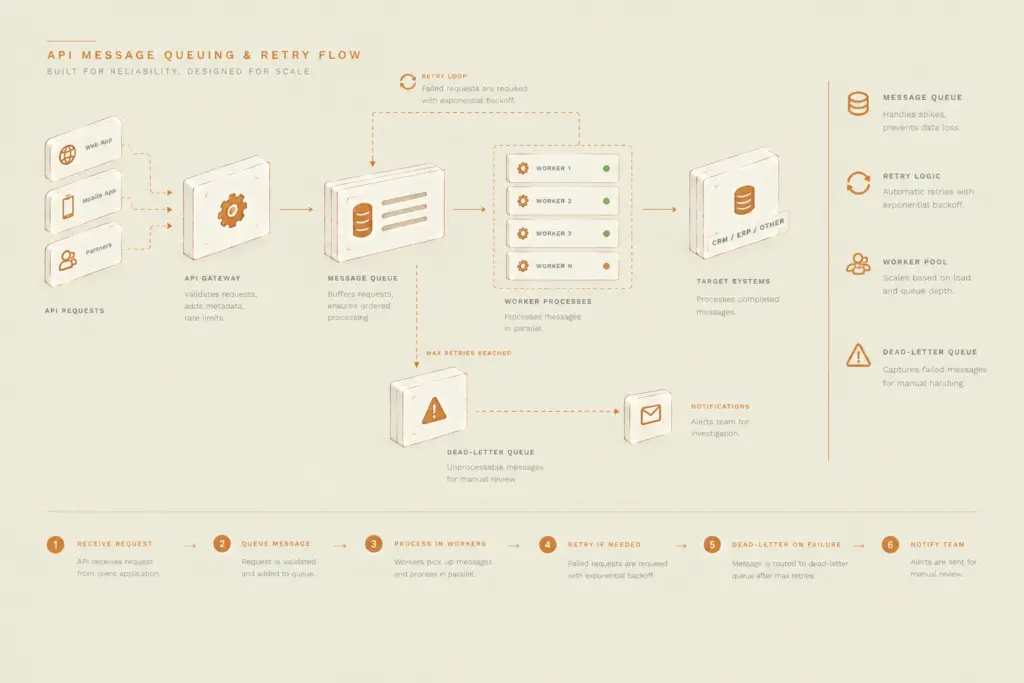
3. Dead-Letter Queues (DLQ) & Payload Audit Logging
Capture failed API payloads in dedicated DLQs with detailed error logs, allowing engineering teams to inspect, debug, and safely replay failed transactions without manual database intervention.
03 — Business Value of Scalable API Infrastructure
Investing in a well-architected API layer delivers immediate operational stability and long-term technical ROI:
- 100% Data Delivery Guarantees: Asynchronous buffering ensures zero lost leads or customer events during server maintenance or unexpected traffic surges.
- Uncompromising System Performance: Sales reps experience zero CRM interface lag while background integrations process thousands of automated updates per minute.
- Modular Platform Upgrades: Swap or upgrade individual software tools across your stack without rewriting core integration logic or disrupting downstream workflows.
04 — Architecting for Enterprise Longevity
Your CRM is the central nervous system of your commercial enterprise. By building a scalable, queue-backed API architecture around it, your business protects critical operational data, ensures system stability, and builds a digital platform engineered to scale indefinitely.
Build a High-Throughput CRM Infrastructure Stop letting rate limits and unhandled webhooks compromise your sales data. Explore our CRM integration services and check our custom integration pricing packages to build a resilient, queue-backed API architecture designed for enterprise growth.