Table of Contents
Real Estate Listing Alert Bot: Catch New Homes in Seconds
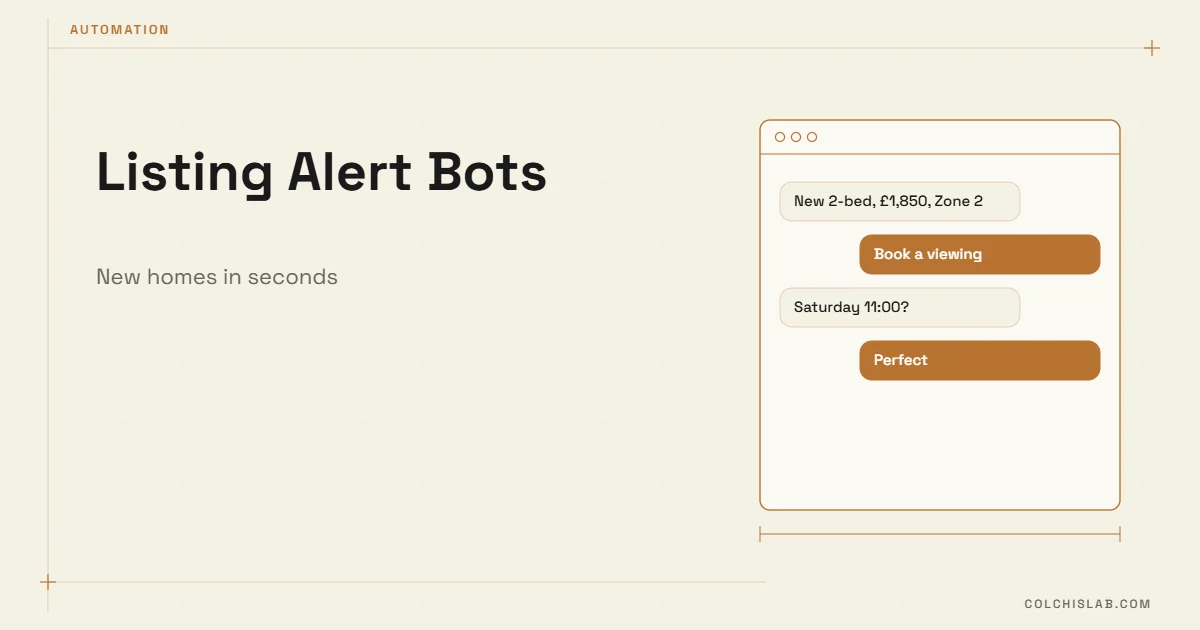
A real estate listing alert bot is a small program that checks property portals and other sources every few minutes, keeps only the homes that match your filters, removes duplicates and sends each new listing to Telegram, WhatsApp or Slack within seconds. Built-in portal emails are often batched; a bot turns “saw it this evening” into “called the agent in the first five minutes”.
That gap matters for renters in tight cities, for buyers chasing under-priced homes, for investors and for agents who want new stock before competitors. Below: why speed pays, how the bot works, three ways to build one, what it costs and where the legal lines are.
Table of Contents
Why the First Hour Decides Who Gets the Viewing
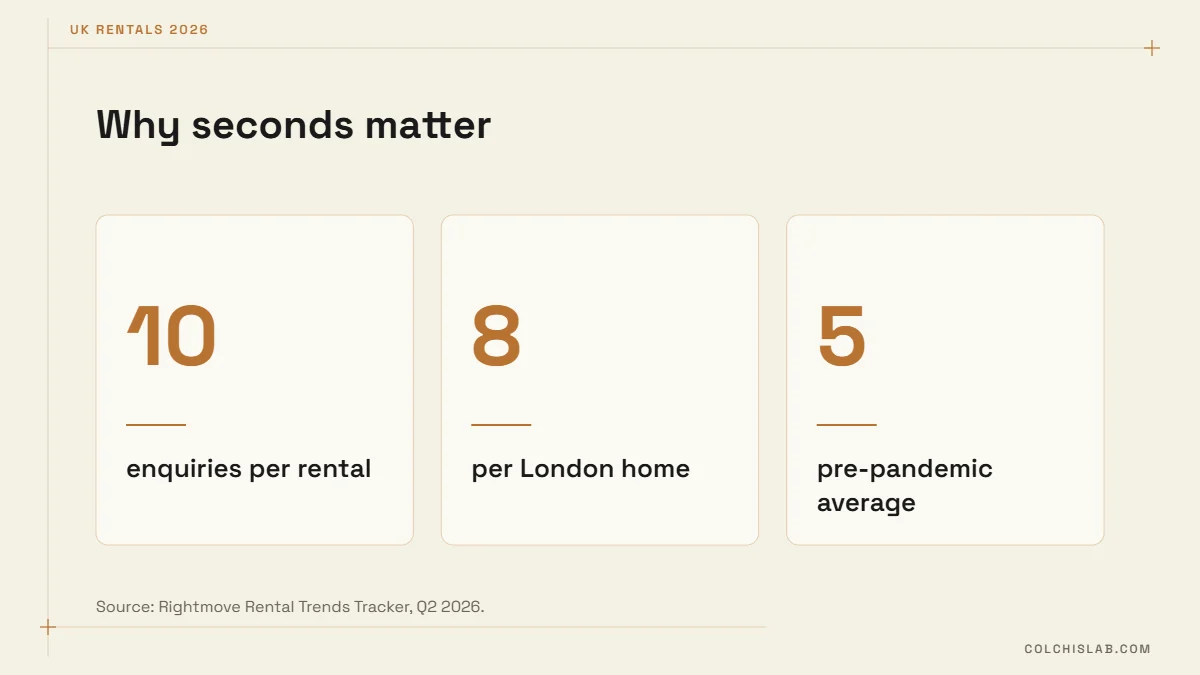
Demand per listing is still far above pre-pandemic levels. According to the Rightmove Rental Trends Tracker (Q2 2026), the average UK rental home receives 10 enquiries, down from a peak of 22 in 2022 but double the pre-pandemic average of 5; the North West sees 14 per property. Asking rents hit new records: £2,791 a month in London and £1,397 outside it.
Agents rarely read all of those enquiries. In practice they book viewings with the first few serious people and stop. The same pattern appears in Berlin, Dublin, Amsterdam, Toronto and Tbilisi: good flats at fair prices are gone in a day or two. The useful question is not “is there a listing?” but “how soon do I know about it?”.
Where portal alerts fall short
- Email alerts are often sent in batches – daily or a few times a day – rather than instantly.
- Each portal alerts only about its own listings, so you juggle three apps and see the same flat three times.
- Filters are generic: you can rarely say “within 10 minutes’ walk of this station” or “exclude ground floor”.
- Emails land in a tab you check twice a day; a phone push lands where you already are.
How a Real Estate Listing Alert Bot Works
Every real estate listing alert bot we have built follows the same five steps. The logic is simple; the quality is in the details of each step.
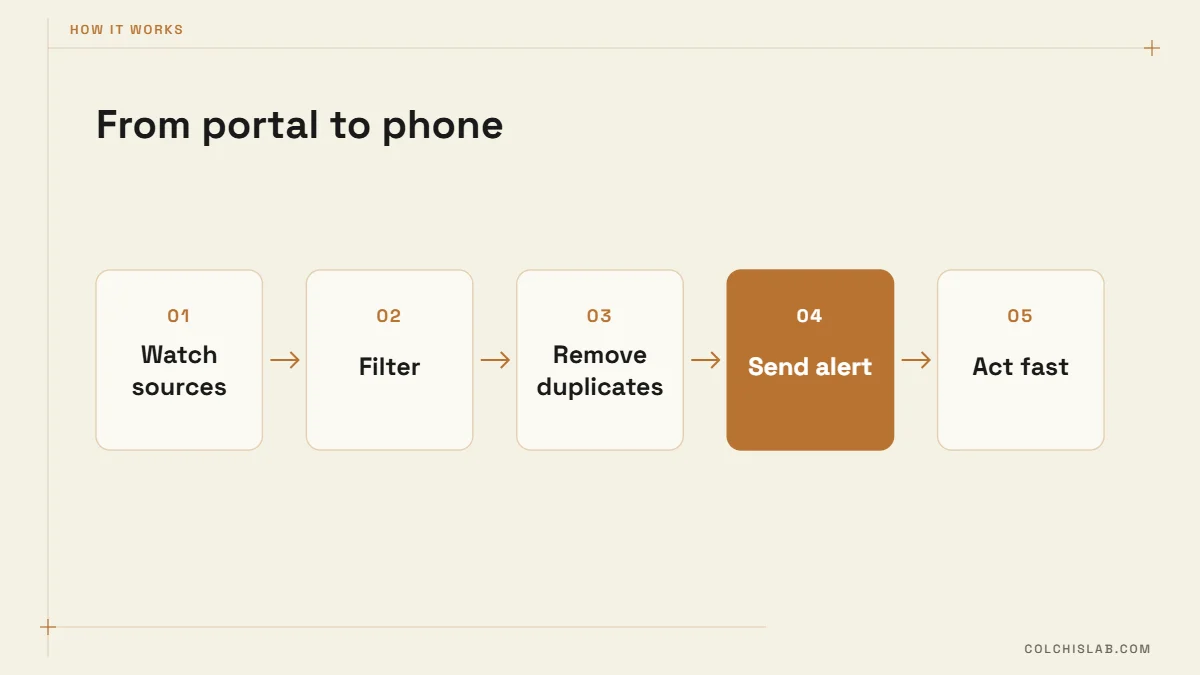
- Watch sources. The bot checks your sources on a schedule – every 2–5 minutes for rentals, every 15–30 minutes for sales. Sources can be official APIs or data feeds, the portal’s own alert emails (parsed automatically), RSS where offered, or agency websites you have permission to monitor.
- Filter. Price, area (ideally a drawn map polygon, not just a district), rooms, size, floor, keywords such as “pets allowed” or “parking”, and exclusions such as “no basement”.
- Remove duplicates. The same home is often posted on two or three portals and re-posted by several agents. A good bot matches on address, size, floor and price, plus photo similarity, so you see it once.
- Send the alert. A short message: price, size, area, the first photo, a link and one-tap buttons such as “Call agent”, “Save” or “Not interested”.
- Act fast. For agents, the alert can also create a lead in the CRM, assign it to a colleague and draft a reply.
Telegram is usually the easiest channel: the Bot API is free, supports photos and buttons, and handles high volumes (the Telegram Bot FAQ suggests staying under about 30 messages per second for broadcasts). WhatsApp works too through the Business Platform, but proactive messages need approved templates and are paid per message, which we cover in our WhatsApp Business API chatbot guide.
Portal Alerts vs a Custom Bot
| Built-in portal alerts | No-code page monitor | Custom bot | |
|---|---|---|---|
| Speed | Batched or near-instant, depends on portal | Every 5–60 min | Every 2–5 min |
| Sources | One portal | Pages you set up | Several portals and agency sites |
| Duplicates removed | No | No | Yes |
| Custom filters | Basic | Basic | Anything you can define |
| Channel | Email, app push | Email, Slack | Telegram, WhatsApp, CRM |
| Cost | Free | Monthly subscription | One-time build + hosting |
If you search in one city on one portal and its app pushes instantly, start there – it is free. A real estate listing alert bot earns its keep when you watch several sources, need sharper filters or want alerts to flow into a team process.
Three Ways to Build One
1. No-code: page monitor plus messenger
Tools that watch a web page for changes can alert you when a saved search result page changes. Setup takes an hour, but you get noisy alerts (“something changed”), no de-duplication, and the page layout can break the monitor at any time.
2. Low-code: parse the alerts you already receive
Subscribe to every portal’s instant alerts with a dedicated email address, then let an automation (n8n, Make or a small script) read those emails, extract price, size and link, apply your extra filters, remove duplicates and forward the result to Telegram. You stay inside what each portal already offers you, which keeps it simple and compliant.
3. Custom: APIs and agreed data feeds
For agencies, investors and proptech teams, a custom real estate listing alert bot pulls from official APIs, MLS/IDX feeds (in the US), partner feeds and agency sites you have agreements with. It stores listings in a database, tracks price changes over time, scores each home against several client profiles and writes matches into the CRM. This is the version we usually build, often next to a CRM for real estate agents.
Filters That Separate Signal From Noise
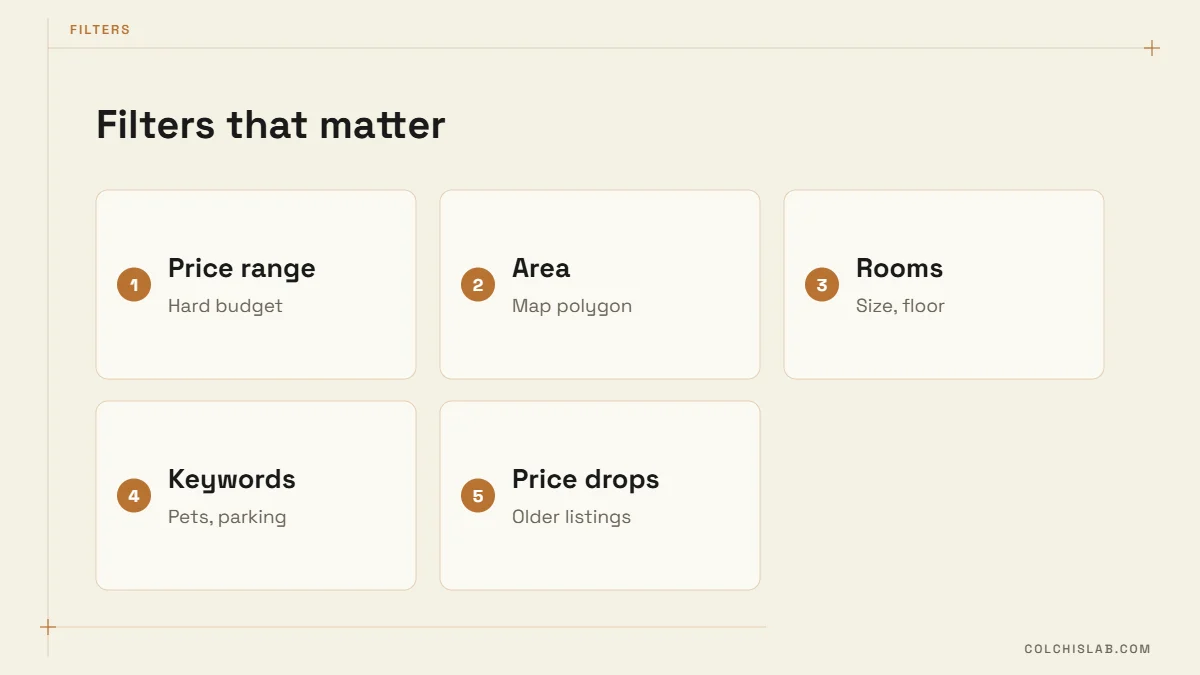
Most people set a price ceiling and a district, then drown in alerts from their real estate listing alert bot. The filters that make a bot genuinely useful are more specific:
- Map polygon or travel time instead of a district name.
- Price per square metre under a threshold – the fastest way to spot under-priced homes.
- Price drops on listings older than 30 days, where sellers are ready to negotiate.
- Negative keywords: “basement”, “studio”, “no pets”, “short let”.
- Agent or private – some buyers only want private sellers, some agents want only new agency stock.
- Quiet hours with a morning digest, so the bot is helpful rather than exhausting.
Use Cases for Agents and Agencies
For a brokerage, a real estate listing alert bot becomes a lead machine rather than a personal tool. Typical set-ups we see:
- Buyer matching: each client’s criteria are stored in the CRM; every new listing is matched against all clients and the agent gets “3 clients match this flat”.
- New-to-market watch: private sellers listing directly are flagged within minutes, so the agent can offer to help.
- Competitor and price tracking: weekly reports on new stock and average asking price per area.
- Investor alerts: yield estimates calculated from asking price and typical rent for the area.
Legal and Ethical Rules
Before you build a real estate listing alert bot, check what each source allows. Many portals forbid automated scraping in their terms of use, and in the EU and UK databases can be protected in their own right. Our rules for clients:
- Prefer official APIs, licensed feeds, alert emails you subscribed to and sources with written permission.
- Respect robots.txt, rate limits and the portal’s terms; never bypass logins or CAPTCHAs.
- Treat agent names and phone numbers as personal data under GDPR (or local equivalents): store only what you need, delete when no longer needed.
- Link back to the original listing rather than republishing photos and descriptions.
What It Costs
Costs depend on the number of sources, the filters and whether the bot connects to a CRM. As a rough guide:
| Option | Set-up | Running cost |
|---|---|---|
| Portal alerts | Free | Free |
| No-code monitor + Telegram | 1–2 hours of your time | Monthly tool subscription |
| Email-parsing bot (n8n / script) | Small project | Low-cost server |
| Custom bot with database and CRM | Project quote by scope | Hosting + maintenance |
Telegram itself is free. If you use WhatsApp, budget for Meta’s per-message fees on alerts sent outside a 24-hour conversation window.
What We Learned Building These Bots
In our own builds the biggest wins came from de-duplication and price-per-metre filters, not from checking more often. Users trust a bot that sends five relevant homes a day and stop reading one that sends fifty. We also log every alert with the time it was found, so clients can see how many minutes they gained over the portal’s own email. If you want a real estate listing alert bot that feeds your agency pipeline, see our automation bots service or the broader guide to a Telegram bot for business.
Send us your project with the portals you watch, your filters and where alerts should go – we’ll suggest the simplest set-up that works.
What is a real estate listing alert bot?
It is an automated program that checks property portals and other sources, filters new listings by your criteria, removes duplicates and sends matches to your phone via Telegram, WhatsApp or email within minutes.
Is it legal to use a bot to monitor property listings?
It depends on the source. Official APIs, licensed feeds and alerts you subscribed to are safe; scraping a portal against its terms of use is not. Always check the terms and respect rate limits.
How fast are listing alerts from a bot compared to Zillow or Rightmove emails?
A bot typically checks every 2–5 minutes, while portal emails can be batched. The exact gain depends on the portal’s own alert settings, so measure it with timestamps.
Can I get property alerts on Telegram or WhatsApp?
Yes. Telegram is free and the simplest channel. WhatsApp works through the Business Platform, but alerts sent outside a 24-hour chat window need approved templates and are paid per message.
How much does a listing alert bot cost?
A no-code monitor costs a monthly subscription; a custom bot with several sources, de-duplication and CRM sync is a one-time project plus low hosting costs, priced by scope.
Can real estate agents use alert bots for clients?
Yes. Agencies store each client’s criteria in a CRM and let the bot match every new listing against all clients, so agents contact the right buyer first.