Table of Contents
How Enterprise Web Architecture Drives Multi-Stakeholder Trust

A standard business website typically speaks to a single target audience. An enterprise web platform, however, must successfully navigate the complex demands of multiple stakeholders simultaneously. When enterprise clients, investors, internal IT teams, and strategic partners interact with your digital infrastructure, their expectations shift from basic aesthetics to security, compliance, performance, and seamless functionality.
Trust at the enterprise level is not built on clever marketing copy alone; it is engineered into the very architecture of your digital presence
01 — The Challenge of Serving Multiple Audiences
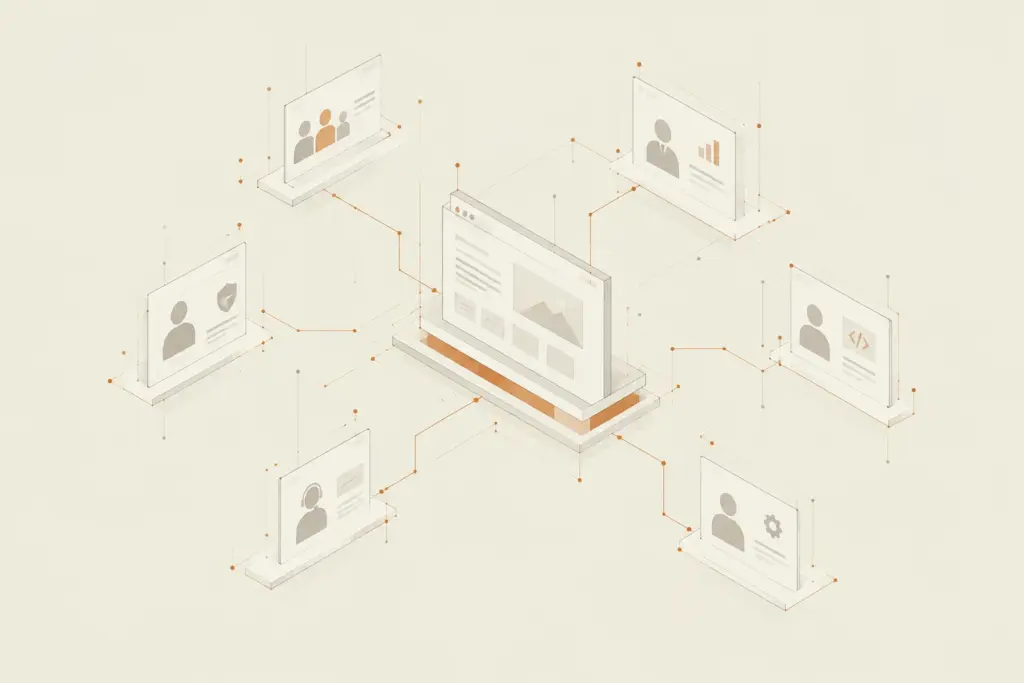
Enterprise platforms must act as a central hub for highly diverse user groups, each with competing priorities. Failing to address the technical and informational needs of any single group can result in stalled procurement processes or lost investor confidence.
- The End-User (Clients & Partners): Demands intuitive UI, lightning-fast load times, and frictionless access to support or product documentation.
- The IT & Security Team: Requires strict compliance standards, impenetrable data security, and architecture that aligns with internal tech stacks.
- The Executive & Investor Board: Looks for clear corporate messaging, verifiable metrics, and a digital footprint that reflects market leadership and stability.
“At the enterprise level, your website is your digital headquarters. If the architecture feels fragile, stakeholders will assume your internal operations are too.”
02 — Core Elements of Trust-Driven Architecture
To satisfy these diverse requirements, enterprise web foundations must be built on rigid technical standards that prioritize stability and security above all else.
1. Bank-Grade Security & Compliance
Enterprise stakeholders need to know their data is safe. Implementing advanced encryption, role-based access control (RBAC), and maintaining compliance with global data standards (like GDPR or SOC2) are non-negotiable architectural requirements.
2. High Availability & Global Performance
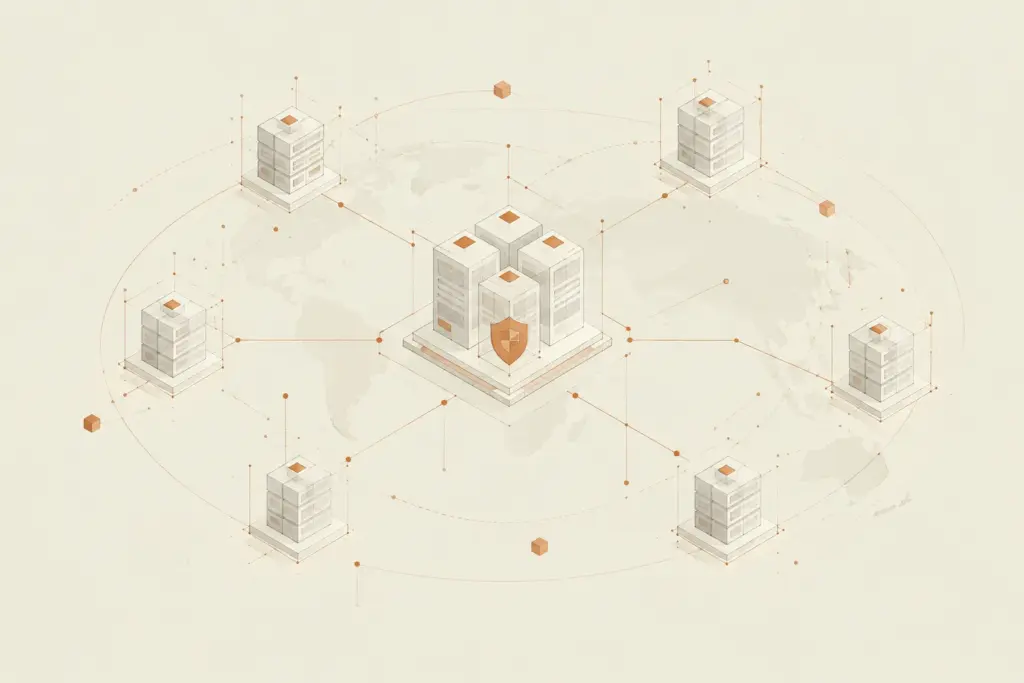
Downtime is not just an inconvenience; it is a breach of trust. Utilizing global Content Delivery Networks (CDNs), decentralized server architectures, and load balancing ensures that your platform remains online and lightning-fast, whether a stakeholder is accessing it from Tokyo or New York.
3. Modular Scalability (Headless Architecture)
Legacy enterprise sites often suffer from slow update cycles due to tightly coupled backends. Transitioning to a headless architecture—where the frontend user experience is decoupled from the backend database—allows marketing teams to update content instantly without waiting on IT, all while maintaining strict security protocols.
03 — Seamless Integrations that Build Confidence
An enterprise web architecture must communicate flawlessly with the rest of your operational software. When external stakeholders see a fragmented digital ecosystem, their confidence drops.
- ERP & CRM Synchronization: When a partner submits a vendor request, that data should flow seamlessly into your CRM and ERP systems without manual handling, triggering immediate, automated follow-ups.
- Business Intelligence (BI) Dashboards: Providing secure, personalized portal access where investors or B2B clients can view real-time performance data builds immense transparency.
- Automated Onboarding Pipelines: Connecting your web architecture directly to secure document signing and compliance tools reduces friction and accelerates enterprise deal cycles.
04 — The ROI of Architectural Trust
Upgrading to enterprise-grade web architecture is a significant investment, but the return is measured in accelerated sales cycles and operational efficiency. When IT departments can vet your digital infrastructure without raising red flags, and executives experience a flawless, premium digital journey, the friction of enterprise procurement melts away.
By prioritizing security, speed, and deep system integration, your website transitions from a basic corporate brochure into a powerful engine for stakeholder trust.
Ready to Build an Enterprise-Grade Digital Ecosystem?
Stalled procurement processes and security concerns shouldn’t hold back your organization’s growth. If you are ready to construct a secure, high-performance platform engineered for multi-stakeholder trust, explore how we structure tailored foundations on our Business Websites page, or discover our full scope of custom architectures on our Services page.