Table of Contents
SEO for Small Business in 2026: A Practical Starter Guide
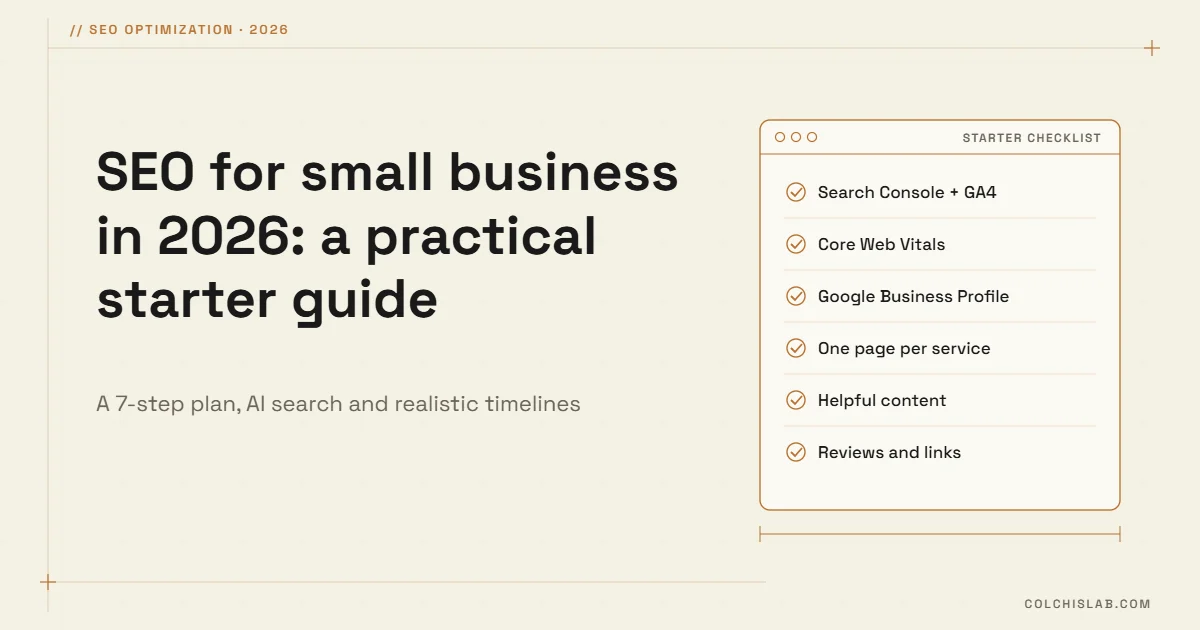
SEO for small business in 2026 means making sure that when people search for what you sell, in Google or in AI answers, they find you and choose you. The basics have not changed: a fast, clear website, a complete Google Business Profile, pages that answer real questions and a reputation others talk about. What changed is how results look, and that makes every click worth more.
This guide gives you a 7-step plan in priority order, the numbers to aim for and realistic timelines, so you know what to do yourself and what to hand over.
Table of Contents
What changed in search, and why SEO for small business still works
Google now answers many questions directly with AI Overviews and AI Mode. Alphabet reported in its Q2 2026 results that AI Mode passed 1 billion monthly users. Those answers take clicks: in a Pew Research study of real searches, people clicked a result 8% of the time when an AI summary appeared, against 15% without one.
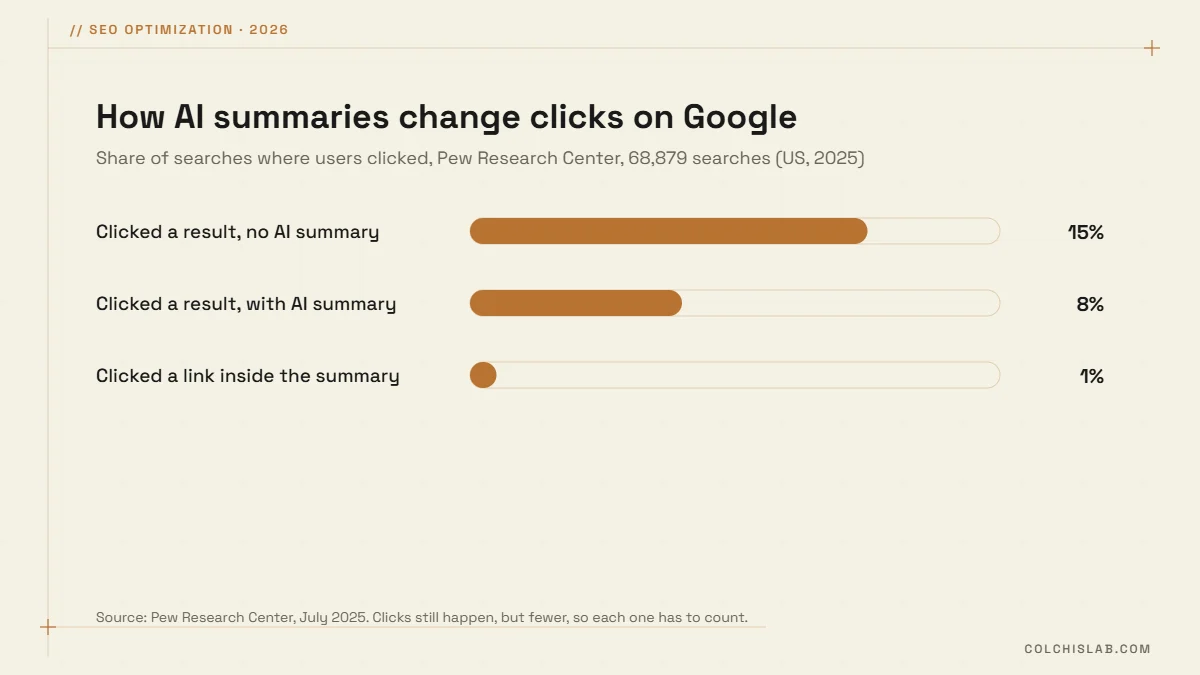
The good news: Google says there are no special requirements to appear in AI features. A page has to be indexed and eligible for a normal snippet. In other words, good SEO is still the entry ticket. The difference is that small businesses should measure leads and calls, not only traffic.
The 7-step small business SEO plan
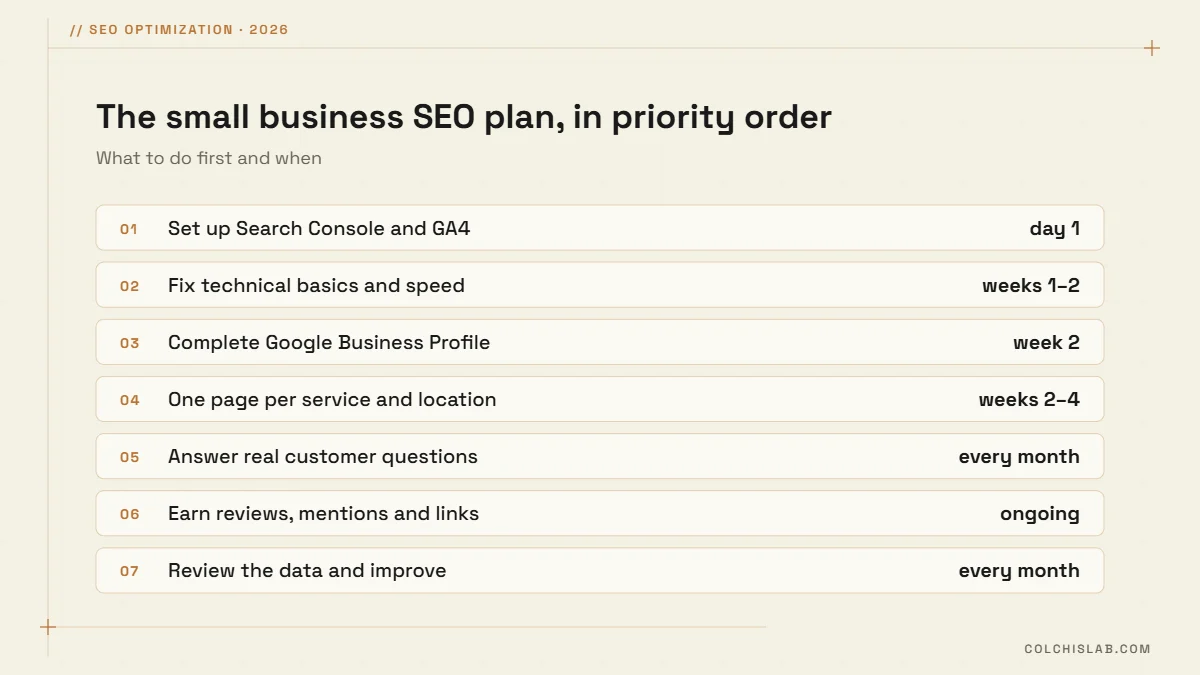
1. Measure first
Connect Google Search Console, submit your sitemap and set up GA4 with your key actions (form sent, call, WhatsApp click). Without this you are guessing. Search Console also shows traffic from AI Overviews and AI Mode inside the normal “Web” report.
2. Fix the technical basics
HTTPS, a mobile-friendly layout, no accidental noindex, one canonical URL per page and clean internal links. Then check speed with Google’s Core Web Vitals, measured on 75% of real visits:
| Metric | What it measures | Good |
|---|---|---|
| LCP | How fast the main content loads | 2.5 s or less |
| INP | How quickly the page reacts to taps and clicks | 200 ms or less |
| CLS | How much the layout jumps while loading | 0.1 or less |
Our technical SEO checklist and guide to Core Web Vitals go deeper.
3. Complete your Google Business Profile
For local businesses this is often the fastest win. Google ranks local results by relevance, distance and prominence, and says complete, accurate profiles and more positive reviews help. Fill in every field, add real photos, keep your name, address and phone identical everywhere, and reply to every review. The BrightLocal 2026 survey found that 97% of consumers read reviews of local businesses.
4. One page per service and location
A single “Services” page cannot rank for ten different searches. Give each main service its own page with a clear title, a unique meta description, one H1 and the questions customers ask about it. See how to structure pages in our guide to local SEO architecture.
5. Publish helpful content
Answer the questions customers ask before they buy: prices, timelines, comparisons, how the process works. Google’s helpful content guidance asks for content made for people, with clear authorship and first-hand experience. Write sections that stand on their own; AI features pull answers by subtopic. Our article on website costs is an example of this format.
6. Earn reviews, mentions and links
Local directories, partners, suppliers, chambers of commerce and local media are the safest sources of links for a small business. Mentions of your brand on other sites also help AI tools recognise you. Avoid buying links.
7. Review every month
In Search Console, look for pages with many impressions but few clicks and improve their titles and content. Track leads, calls and bookings next to traffic.
How long does SEO for small business take?
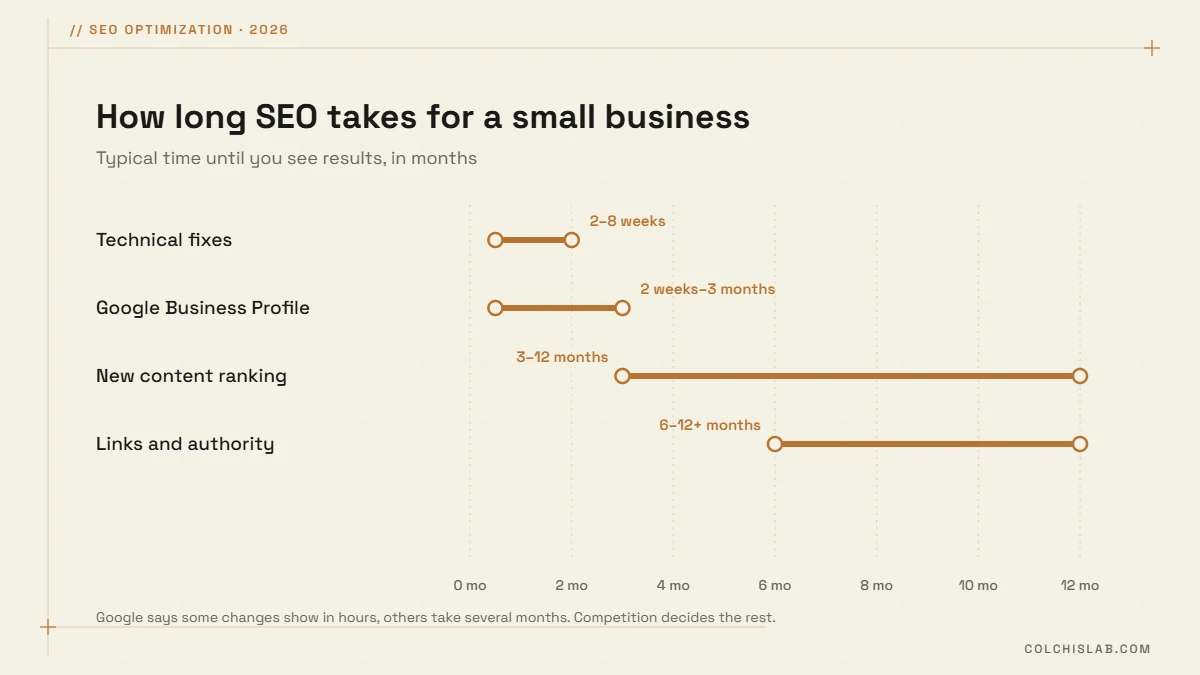
Google’s own SEO Starter Guide says some changes take effect in hours and others take several months. In practice, technical and Business Profile fixes show within weeks, while content and links usually need 3 to 12 months in competitive markets.
Do it yourself or hire help?
- Do it yourself: Business Profile, reviews, basic page titles and answering customer questions. Nobody knows your customers better than you.
- Get help with: site speed, technical audits, site structure, schema and a content plan built on keyword research.
- Avoid: anyone who guarantees #1 positions or sells links in bulk.
At Colchis Lab, SEO optimization starts from $1,000 per month and covers technical work, content and local search. You can also start with a one-off audit. Send us your website and we will tell you where the quickest wins are.
Is SEO worth it for a small business in 2026?
Yes, if you sell to people who search before they buy. AI answers reduce some clicks, but Google still needs indexed, trustworthy pages to build those answers, and local searches still drive calls and visits.
How long does SEO take for a small business?
Technical and Google Business Profile fixes can show results within weeks. New content and links usually take 3 to 12 months, depending on competition.
Can I do SEO for my small business myself?
Partly. You can manage your Business Profile, reviews and content yourself. Technical SEO, site speed and structure usually need a specialist.
How do I appear in Google AI Overviews?
Google says there are no special requirements. Your page must be indexed and eligible for a normal snippet, so focus on helpful content, clear structure and technical health.
Do Google reviews help SEO?
Yes for local search. Google says more reviews and positive ratings can help local ranking, and replying to reviews shows customers you care.
How much does SEO cost for a small business?
It ranges from a one-off audit to a monthly retainer. At Colchis Lab, ongoing SEO starts from $1,000 per month.