Table of Contents
Monolith vs. Microservices: Designing Scalable Application Architecture
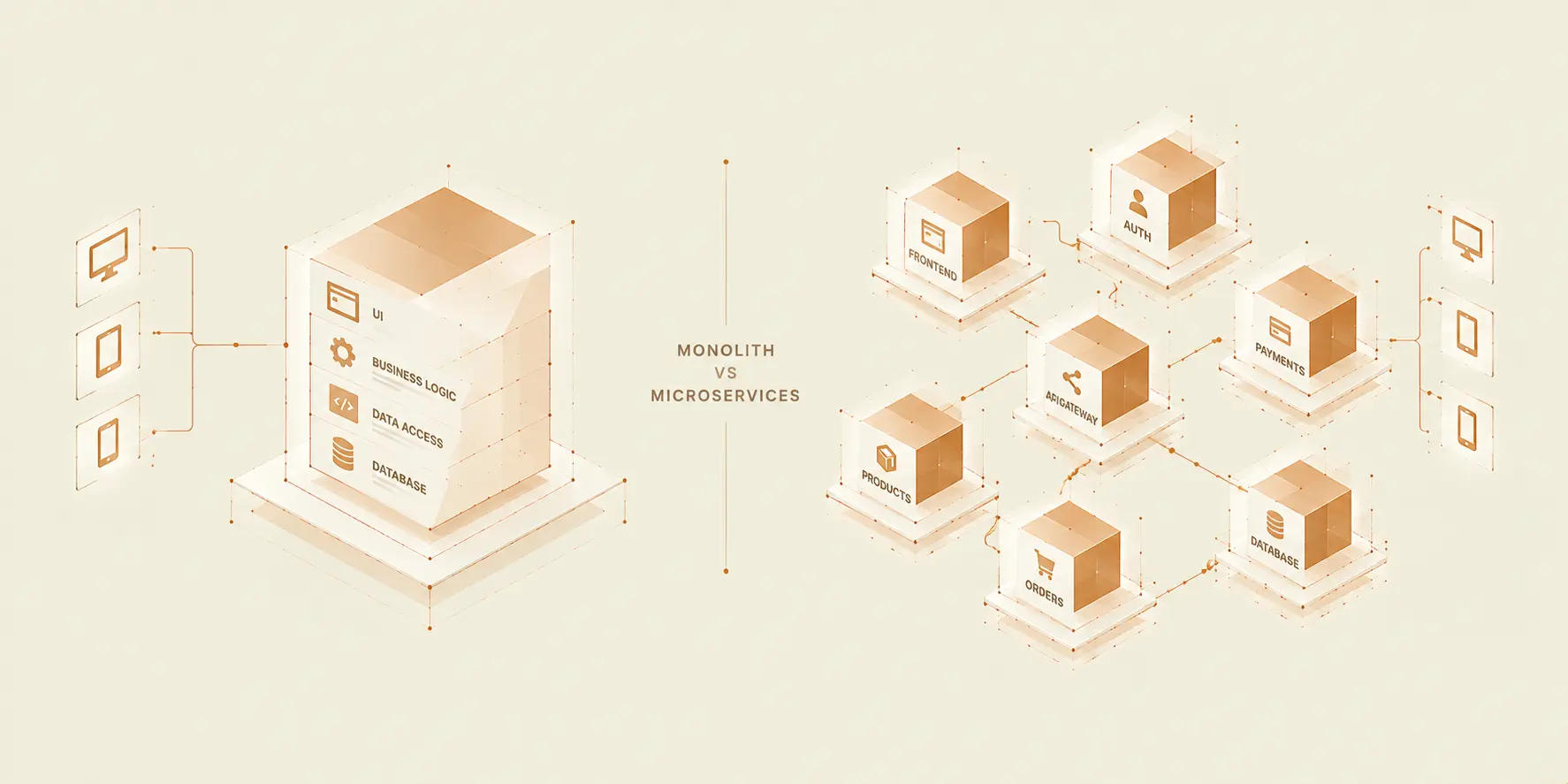
Selecting the right underlying architecture for your digital platform is one of the most critical technical decisions an organization can make. As application requirements expand, the choice between a unified monolithic architecture and a distributed microservices system directly impacts your platform’s deployment velocity, system reliability, and long-term scaling costs.
Neither pattern is inherently superior; rather, each serves specific organizational stages, operational capabilities, and performance goals. Designing for scalability requires understanding where your application currently sits in its lifecycle and how its core services need to evolve.
01 — Understanding the Fundamentals: Monoliths vs. Microservices
Before evaluating trade-offs, it is essential to define how each architectural pattern handles data processing, code organization, and system deployments.
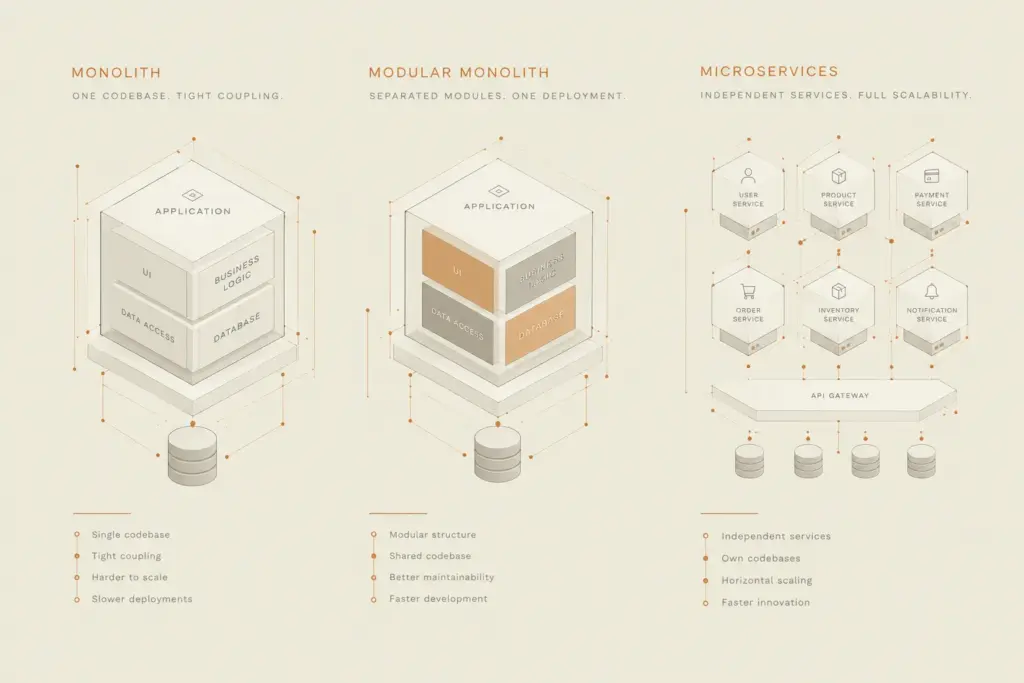
- Monolithic Architecture: A single, unified codebase where all business logic, database queries, and UI components are packaged and deployed together.
- Microservices Architecture: A distributed collection of independent, loosely coupled services, where each service handles a specific business function and communicates via lightweight APIs.
- Modular Monolith (The Middle Ground): A unified codebase structured into clear, isolated domain modules, allowing easy separation into microservices later without initial distributed complexity.
“Scalability is not just about handling more concurrent users—it is about how efficiently your team can ship features, isolate failures, and manage operational complexity.”
02 — Comparing Core Performance Factors
Every architecture involves trade-offs. Evaluating key operational parameters helps determine which model fits your current business scale.
1. Deployment Complexity & Velocity
Monoliths simplify early deployment pipelines because everything builds into a single artifact. However, as teams grow, simultaneous deployments can lead to code conflicts. Microservices enable teams to deploy independent modules continuously without risking the entire application.
2. Fault Isolation & Reliability
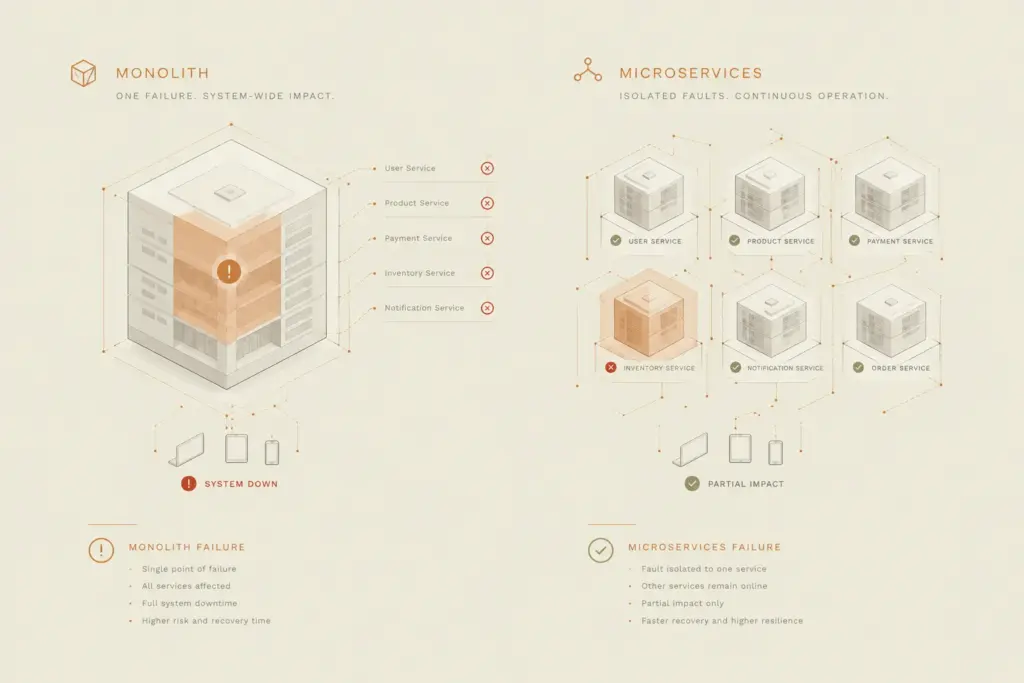
In a traditional monolith, a memory leak or unhandled exception in one section (e.g., PDF generation) can crash the entire system. Microservices isolate errors—if a background task service fails, core transaction endpoints remain online.
3. Latency & Network Overhead
Monoliths execute in-memory calls between functions, offering microsecond-level internal communication. Microservices rely on network calls (HTTP/gRPC) between separate instances, introducing potential network latency and serialization overhead if not properly architected.
03 — When to Choose Which Pattern
Matching system architecture to team size, budget, and business lifecycle prevents premature optimization or technical debt.
- When to Build a Monolith First: For early-stage platforms, MVPs, or smaller engineering teams where rapid iteration, low operational overhead, and quick time-to-market are primary concerns.
- When to Transition to Microservices: For enterprise applications with large, specialized engineering teams, distinct domain boundaries, and high-traffic modules requiring independent scaling (e.g., payment gateways or real-time analytics engines).
- The Migration Strategy (Strangler Fig Pattern): Slowly extract specific business domains from an existing monolith into independent microservices over time, avoiding risky full-system rewrites.
04 — Architecting for Sustainable Long-Term Growth
Scalable web design is not about adopting the newest industry trend—it is about building infrastructure that matches your operational capabilities. Starting with a clean, modular foundation allows your digital platform to deliver speed and stability today while keeping the door open for seamless distributed scaling tomorrow.
Ready to Scale Your Technical Architecture?
Navigating the trade-offs between monolithic efficiency and microservice agility requires a clear technical roadmap. If you are ready to construct a high-performance, future-proof digital platform, explore our transparent rates on our Pricing Page, or learn more about our engineering capabilities on our Web Development Page.