Table of Contents
Generative Engine Optimization: How to Get Cited by ChatGPT and AI Overviews
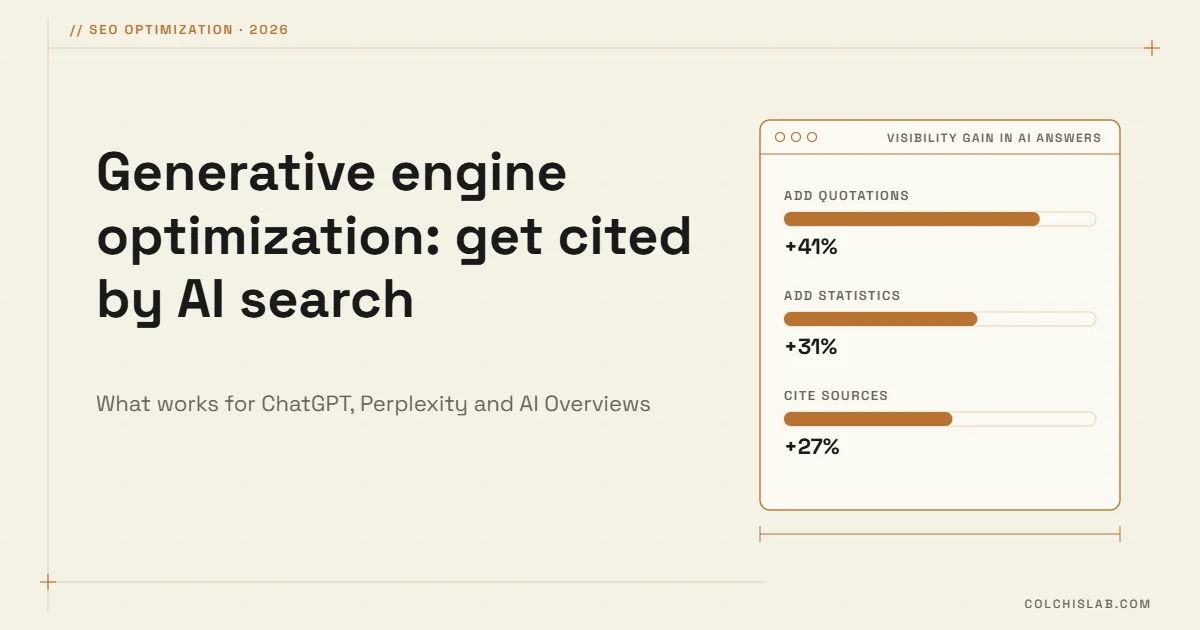
Generative engine optimization (GEO) is the practice of making your content easy for AI search tools such as ChatGPT, Perplexity and Google AI Overviews to find, trust and cite. It builds on classic SEO rather than replacing it: AI answers lean heavily on pages that already rank, but they prefer content that states facts clearly, backs them with sources and answers the question directly. Here is what research and the search engines themselves say actually works in 2026.
This matters because the way people search is shifting. ChatGPT reported around 900 million weekly users in early 2026, and Google shows AI Overviews on a large share of informational searches. AI referrals are still a small slice of website traffic, typically around 1% or less in industry studies, but they tend to arrive at the moment of decision.
Table of Contents
How AI search engines choose sources
Most AI search tools work in two steps. First they retrieve pages from a search index (Google’s for AI Overviews, Bing and their own crawlers for ChatGPT and Perplexity). Then a language model writes an answer and cites some of those pages. You can only be cited if you are retrieved, which is why technical SEO and rankings still come first.
Google says it plainly in its guidance on AI features: there are no extra requirements to appear in AI Overviews or AI Mode, and no special AI text files or markup are needed. The same SEO best practices apply.
What research says works in generative engine optimization
The term comes from a 2023 study by researchers at Princeton, Georgia Tech, the Allen Institute and IIT Delhi, published at KDD 2024 (Aggarwal et al.). They tested nine ways of rewriting content and measured how visible each source became in AI-generated answers. The best methods improved visibility by up to about 40%:
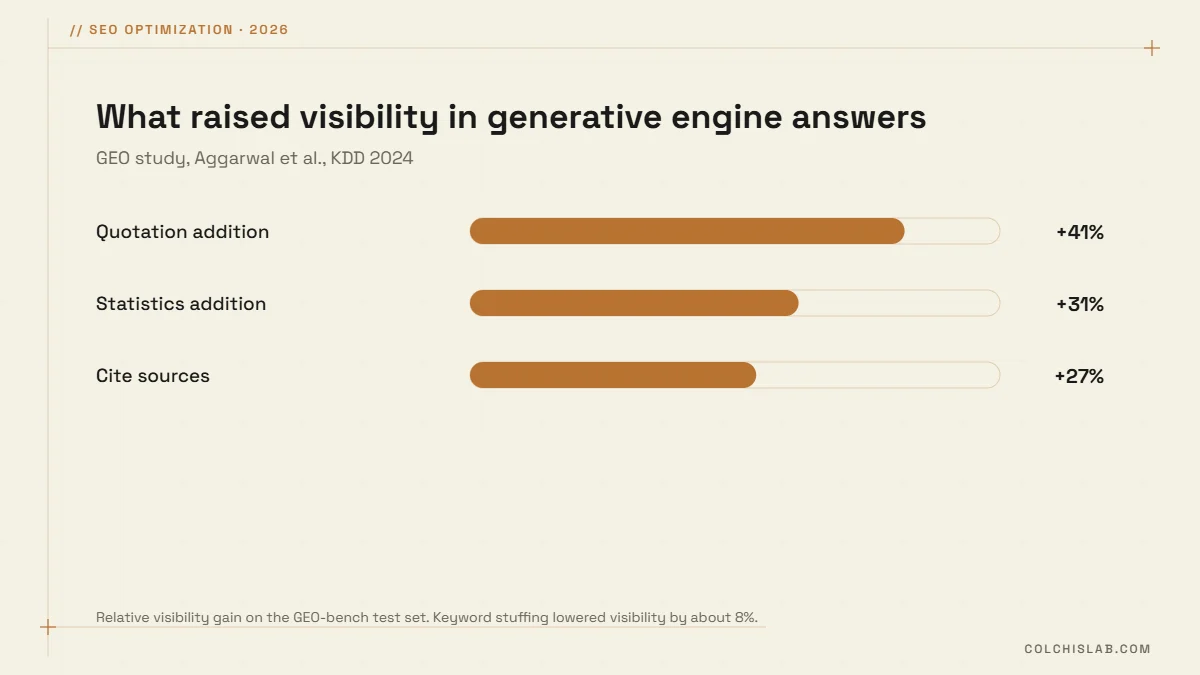
- Adding quotations from relevant people: about +41%.
- Adding statistics instead of vague claims: about +31%.
- Citing sources for key facts: about +27%.
- Keyword stuffing, the old SEO habit, made things worse: about −8%.
The lesson for a small business is simple: write like a reliable reference. Specific numbers, named sources and quotable sentences give an AI model something it can safely repeat.
Practical GEO tactics for a small business website
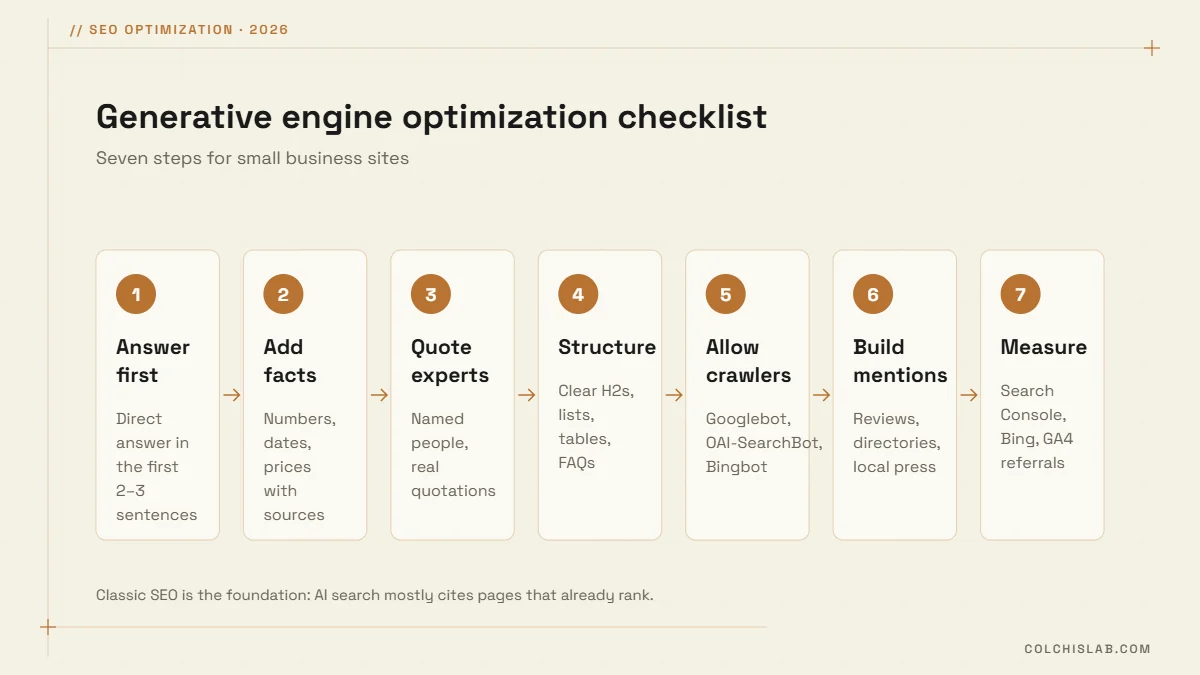
- Answer first. Put a direct, two-to-three-sentence answer at the top of each page, then the detail.
- Use facts with sources. Prices, timelines, percentages and dates, each linked to where it comes from.
- Write quotable sentences. One clear claim per sentence, without needing the paragraph around it.
- Structure the page. Descriptive H2s, lists, comparison tables and a short FAQ at the end.
- Show who you are. Author names, real projects, addresses and reviews support trust for people and for AI.
- Earn mentions elsewhere. AI tools learn about brands from reviews, directories, forums and press, not only from your site.
- Keep pages fresh. Update figures and dates when they change; AI answers favour current information.
Let the right AI crawlers in
Check your robots.txt. Blocking a crawler can quietly remove you from that tool’s answers. The tokens to know:
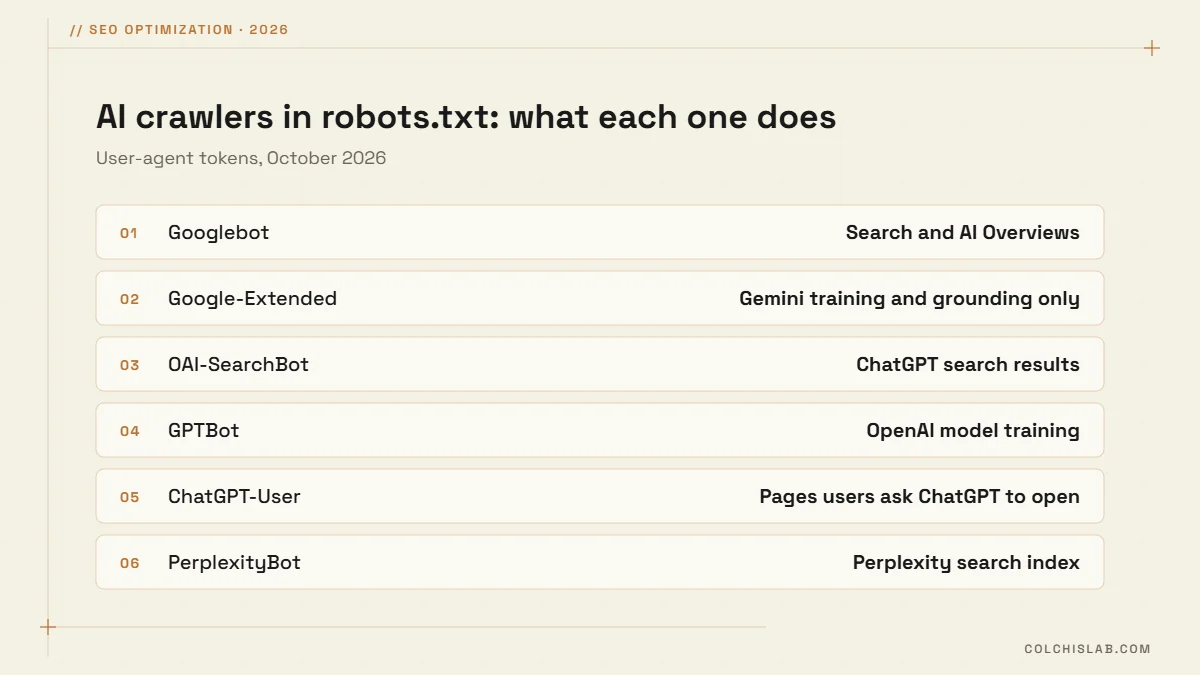
Blocking GPTBot or Google-Extended only stops model training and grounding; it does not remove you from Google Search or ChatGPT search, which use Googlebot and OAI-SearchBot (see OpenAI’s crawler documentation). What about llms.txt? Google has said it does not use it, and none of the major engines rely on it today, so treat it as optional.
How to measure AI search visibility
- Google Search Console: AI Overviews and AI Mode impressions and clicks are included in the Performance report.
- Bing Webmaster Tools: shows how often your pages are cited in Microsoft’s AI answers.
- Google Analytics 4: create a channel group for referrals from chatgpt.com, perplexity.ai, gemini.google.com and copilot.microsoft.com.
- Manual checks: ask the questions your customers ask and note which sources get cited.
Generative engine optimization is not a separate trick. It is good SEO written for a reader that quotes you. Start with the basics in our SEO guide for small businesses, then add the GEO layer.
Our SEO optimization service covers both: technical SEO, content and AI search visibility, measured monthly. Send us your website and we will check how AI tools currently see your business.
What is generative engine optimization?
Generative engine optimization (GEO) is optimizing content so AI search tools such as ChatGPT, Perplexity and Google AI Overviews retrieve, trust and cite it in their answers.
Is GEO different from SEO?
GEO builds on SEO. AI tools mostly cite pages that already rank, so technical SEO and relevance come first. GEO adds clear answers, sourced facts and quotable writing.
Do I need an llms.txt file?
No. Google says it does not use llms.txt, and major AI search engines do not rely on it today. Focus on crawlable, well-structured pages instead.
Should I block GPTBot?
That is a business choice. Blocking GPTBot stops OpenAI model training on your content, but to appear in ChatGPT search you should allow OAI-SearchBot.
How do I know if ChatGPT sends me traffic?
Check referrals from chatgpt.com in Google Analytics 4, ideally in a dedicated AI channel group, and watch for visits with utm_source=chatgpt.com.
How long does generative engine optimization take?
Changes to content can be picked up within weeks once pages are recrawled, but citations depend on rankings and brand mentions that build over months.