Table of Contents
Mapping Content Structure to Search Intent: A Blueprint for Higher Rankings
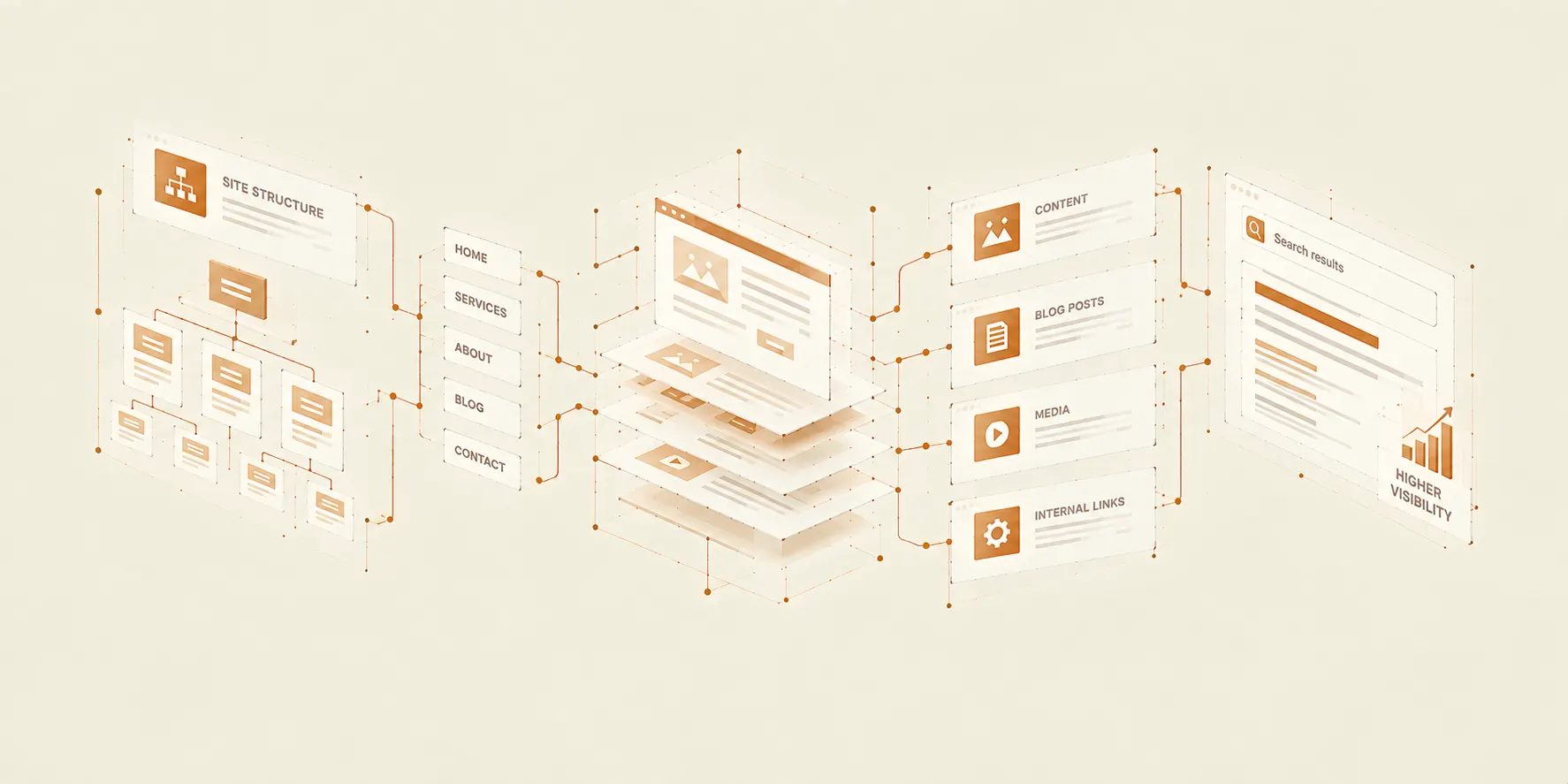
Creating detailed, well-written content is no longer enough to secure primary search engine rankings. Search algorithms prioritize pages that solve user problems fast and accurately. If a user seeks a quick step-by-step technical guide, presenting them with a long-form historical essay creates immediate friction—causing high bounce rates and declining search visibility.
Mapping your content structure directly to search intent involves analyzing what users expect when they type a specific query into a search engine. By aligning your headings, media layout, and calls to action with the precise stage of the user’s decision-making process, you turn raw search traffic into engaged readers and qualified leads.
01 — The Risk of Misaligned Search Intent
When content fails to match user expectations, search engine algorithms notice immediately through user engagement metrics.
- High Bounce Rates & Short Dwell Time: Visitors exit immediately if they cannot find direct answers within seconds of landing on your page.
- Cannibalization Risks: Creating multiple pages targeting similar queries without clear intent boundaries confuses search algorithms on which page to rank.
- Low Lead Conversions: Pitching aggressive sales offers to users looking for early-stage educational information turns high-intent audiences away.
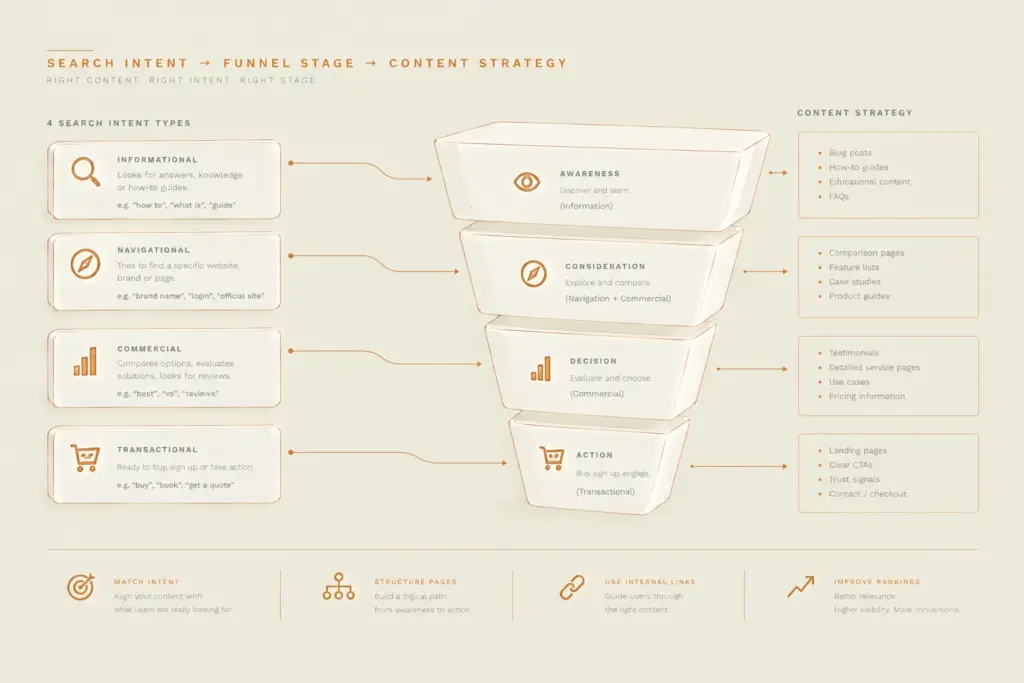
“Search engines don’t rank long content; they rank content that solves user queries with the lowest possible friction.”
02 — Pillars of Intent-Driven Content Architecture
Architecting web pages around user expectations requires analyzing Search Engine Result Pages (SERPs) and building intuitive layout frameworks.
1. SERP Pattern Analysis
Examine top-ranking competitors for your target query to identify required content formats (e.g., bulleted checklists, comparison tables, step-by-step guides, or direct calculators).
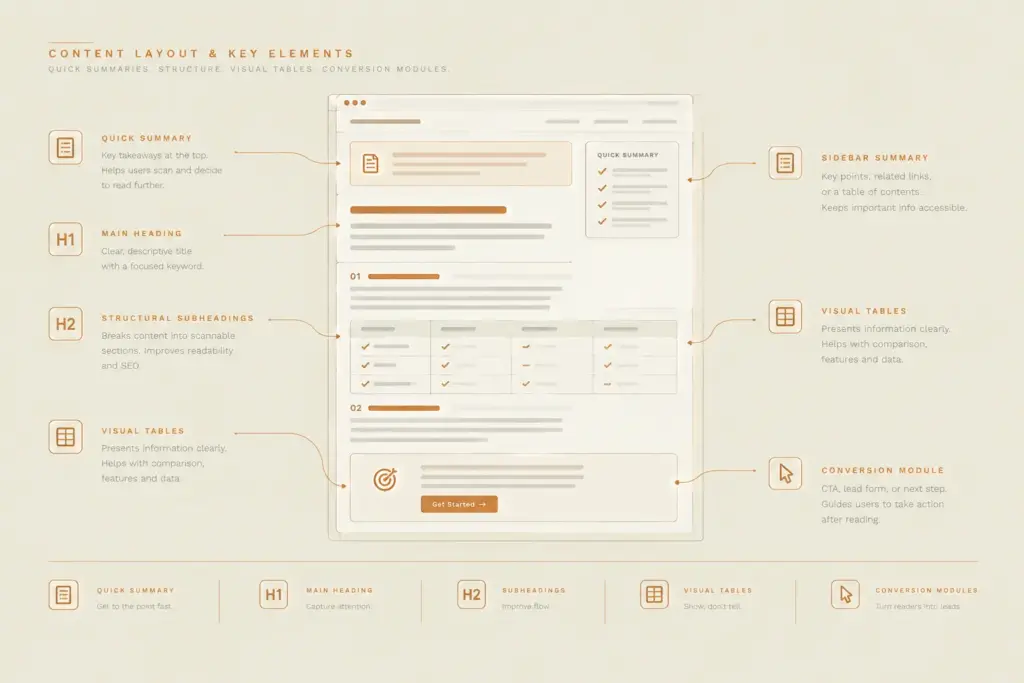
2. Skimmable Headings & Upfront Value
Structure articles using clear H2 and H3 subheadings that directly answer primary sub-questions. Place concise summary sections at the top to satisfy fast-scrolling users immediately.
3. Contextual Call-to-Action Placement
Align CTAs with user mindset: offer downloadable technical guides for informational queries, and offer interactive demos or direct audit requests for transactional keywords.
03 — Measurable Benefits of Intent Alignment
Structuring content around real search behaviors drives sustainable growth across engagement and conversion metrics:
- Featured Snippet Dominance: Concise, well-formatted bullet points and tables capture prominent zero-position SERP placements.
- Improved Dwell Times: Clear visual formatting and logically ordered subtopics keep readers engaged deeper down the page.
- Higher Conversion Rates: Presenting the right solution at the exact right moment in the buyer journey increases total lead completions.
04 — Building Infrastructure for Search Dominance
Matching content structure to user intent bridges technical search optimization with human conversion design. By organizing your digital assets around exact user needs, your platform secures top search positions while building long-term audience trust.
Align Your Content Strategy with High-Intent Organic Search
Convert casual searchers into loyal clients by matching content layouts directly to user intent. Explore our specialized SEO Optimization Services and discover the complete suite of digital Services by ColchisLab to build a search-engine-ready content engine.