Table of Contents
How Internal Workflow Automation Saves Hundreds of Operational Hours
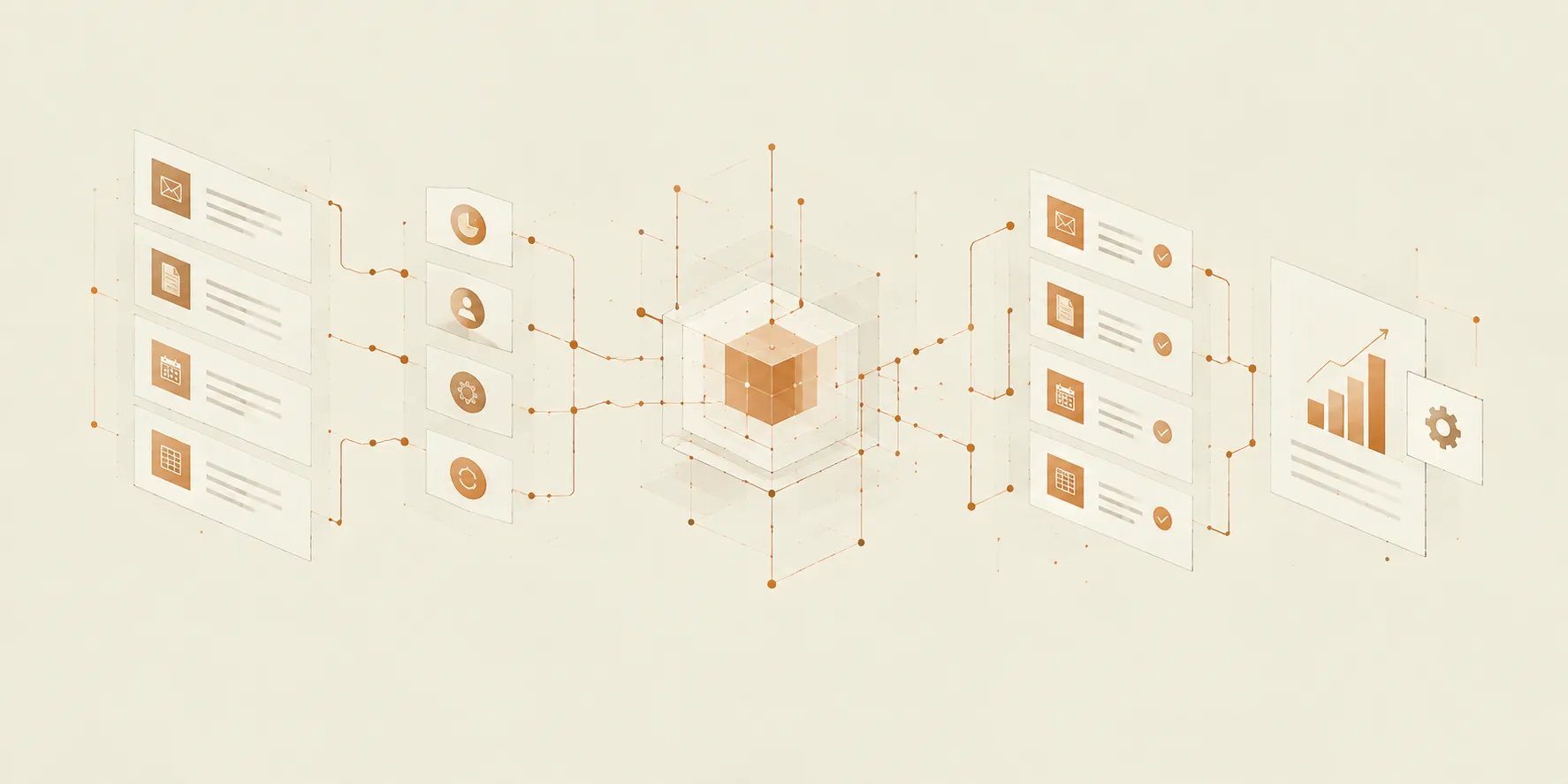
As companies scale, their internal operations often grow increasingly fragmented. Team members end up spending hours copying data between spreadsheets, manually generating invoices, emailing status updates, and updating customer records across disconnected software tools. This invisible operational drag silently eats into profit margins, slows down delivery times, and limits overall capacity.
Internal workflow automation solves this by connecting software platforms, standardizing data transfers, and executing repetitive administrative tasks automatically. Eliminating low-value manual tasks frees up workforce energy to focus on strategic execution and high-value client work.
01 — Identifying Invisible Operational Bottlenecks
Most organizations accumulate operational friction gradually over time. What starts as a quick two-minute manual task becomes a major bottleneck when multiplied across dozens of team members and hundreds of transactions.
- Fragmented Software Ecosystems: Using separate tools for project management, invoicing, CRM, and communication without direct API integrations forces teams to act as human middleware.
- Manual Data Copy-Pasting: Manually copying customer details from web forms or Stripe receipts into internal databases creates high error rates and inconsistent records.
- Delayed Hand-Offs Between Departments: Sales-to-onboarding transitions often stall when account details are transferred manually via internal emails or chat messages.
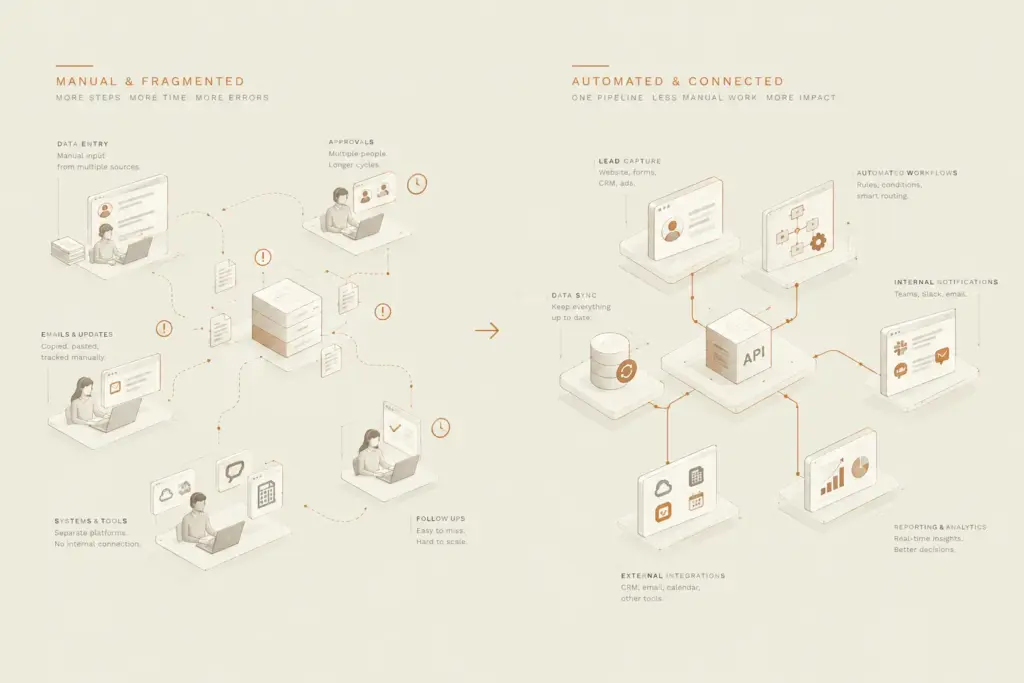
“Operational scaling isn’t about hiring more people to do repetitive work—it’s about building custom automated pipelines that handle routine administration seamlessly in the background.”
02 — Core Pillars of High-Impact Internal Automation
Building an efficient internal automation ecosystem requires connecting your software tools with clear, event-driven rules.
1. Custom Webhooks & API Integration Pipelines
Connecting platforms like HubSpot, Airtable, Slack, Google Workspace, and accounting software via custom webhooks ensures data flows instantly and accurately across every department.
2. Automated Onboarding & Project Setup
When a client pays an invoice or signs a contract, automated workflows can instantly generate project management boards, create Google Drive folders, provision user access, and send welcome packages without human intervention.
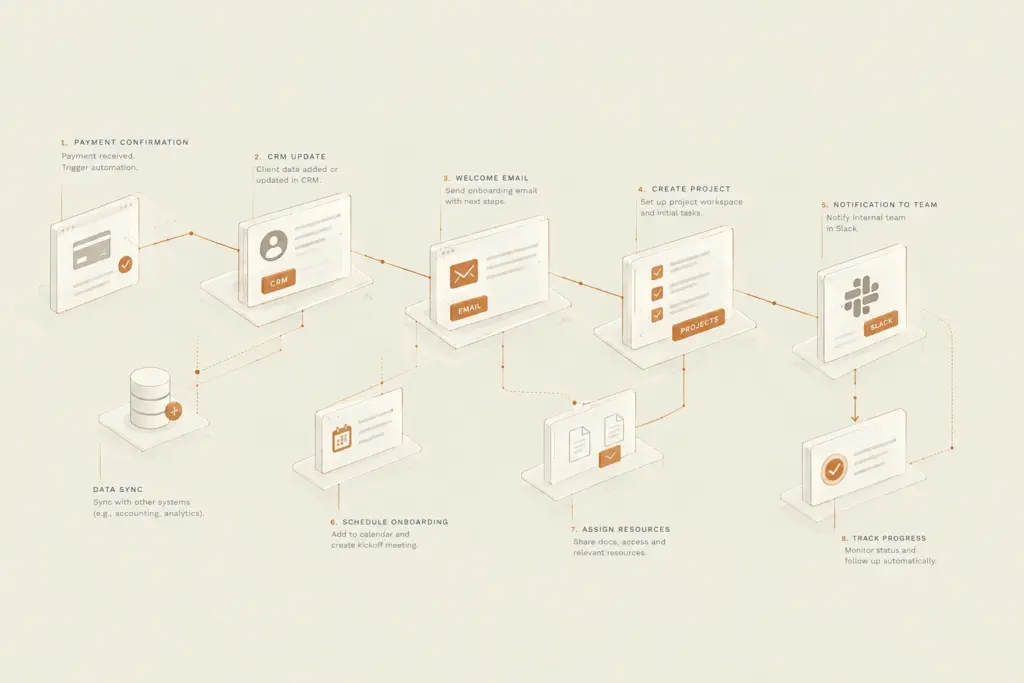
3. Real-Time Operational Alerts & Syncing
Rather than requiring managers to check multiple dashboards, automated monitoring workflows post real-time updates, deadline warnings, and transaction logs directly into team communication hubs like Slack or Microsoft Teams.
03 — Operational Benefits of Eliminating Manual Work
Replacing manual administration with systematic workflow automation delivers immediate improvements across core business metrics:
- Hundreds of Hours Saved Annually: Automating routine administrative tasks recovers thousands of operational hours per year across sales, ops, and fulfillment teams.
- Zero Manual Data Entry Errors: Direct API transfers guarantee that client names, addresses, amounts, and dates remain 100% accurate across all databases.
- Faster Delivery & Client Satisfaction: Instant automated hand-offs mean projects launch faster and customer requests are fulfilled in seconds rather than days.
04 — Architecting a Future-Proof Automation Infrastructure
Scaling your business doesn’t have to mean scaling your administrative overhead. By replacing manual workarounds with robust internal workflow automations, your organization creates an agile operational engine built to handle growing volume effortlessly.
Stop letting routine administration eat into your margins. We build custom API integrations, automated onboarding pipelines, and real-time sync workflows that scale your operations effortlessly.
Explore our flexible pricing structures on our Pricing Page or discover how we architect custom automation systems on our Automation & AI Bots Page.