Table of Contents
Implementing Practical AI Workflows in Modern Enterprise
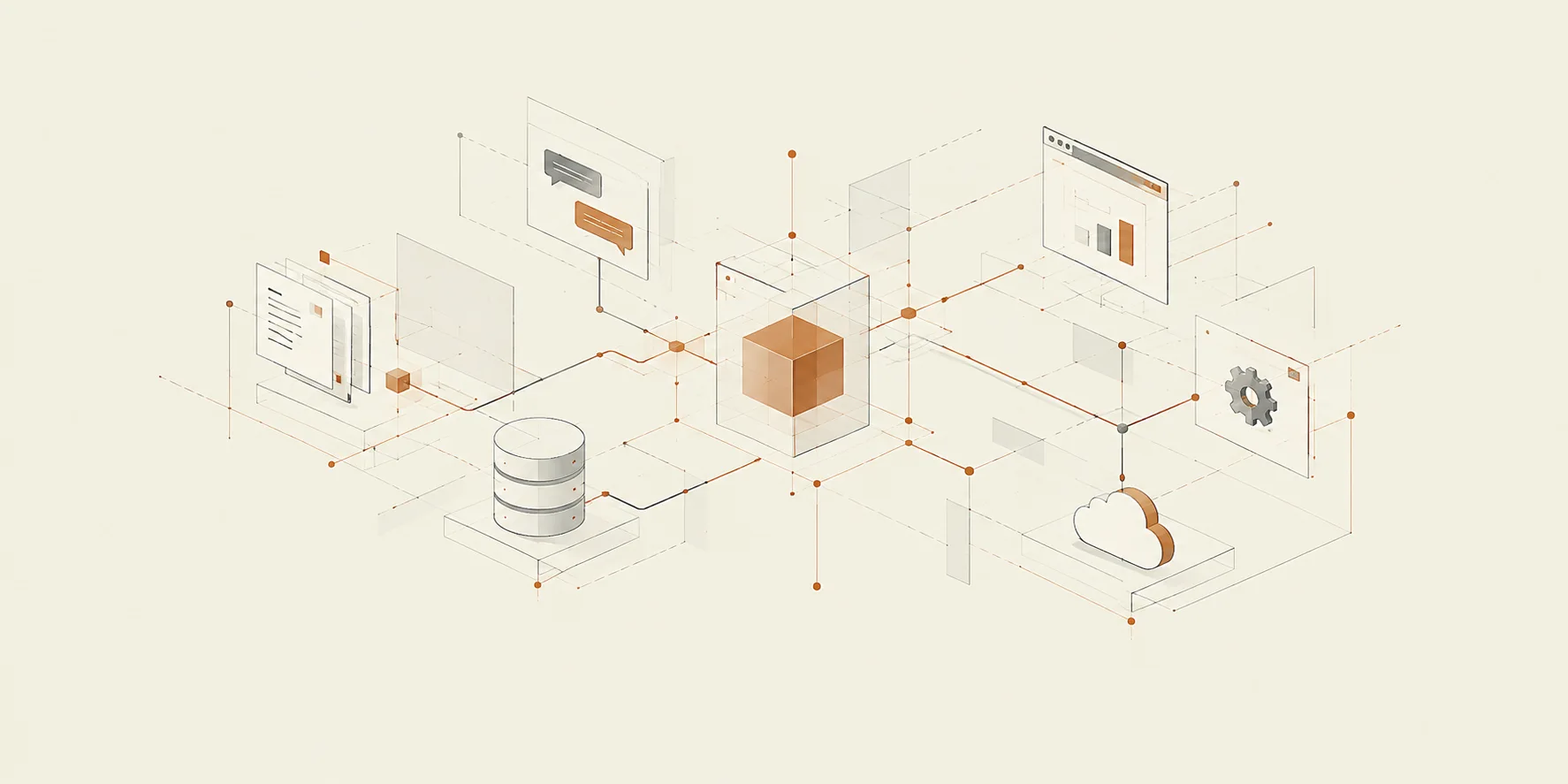
While generative AI has dominated corporate discussions, many enterprise teams struggle to move past basic, conversational chatbot demos. Generic prompts and isolated chat interfaces rarely solve core operational challenges. To capture real value, organizations must integrate artificial intelligence directly into structured, backend business logic.
Practical enterprise AI workflows treat language models not as novel chat toys, but as intelligent processing engines. By embedding custom AI steps inside existing database, document, and operational pipelines, companies automate complex decision-making, eliminate data bottlenecks, and scale output without expanding overhead.
01 — Moving Beyond Generic Chat Interfaces
Relying on off-the-shelf AI chat windows creates isolated knowledge silos and fragmented staff productivity.
- Lack of System Integration: Copy-pasting data back and forth between standalone AI tools and enterprise software introduces friction and security risks.
- Unstructured Output: Standard conversational AI generates loose text rather than structured, validated JSON or database entries required by enterprise software.
- Inconsistent Logic: Without strict validation layers, unguided AI models produce unpredictable outputs that fail quality control standards.
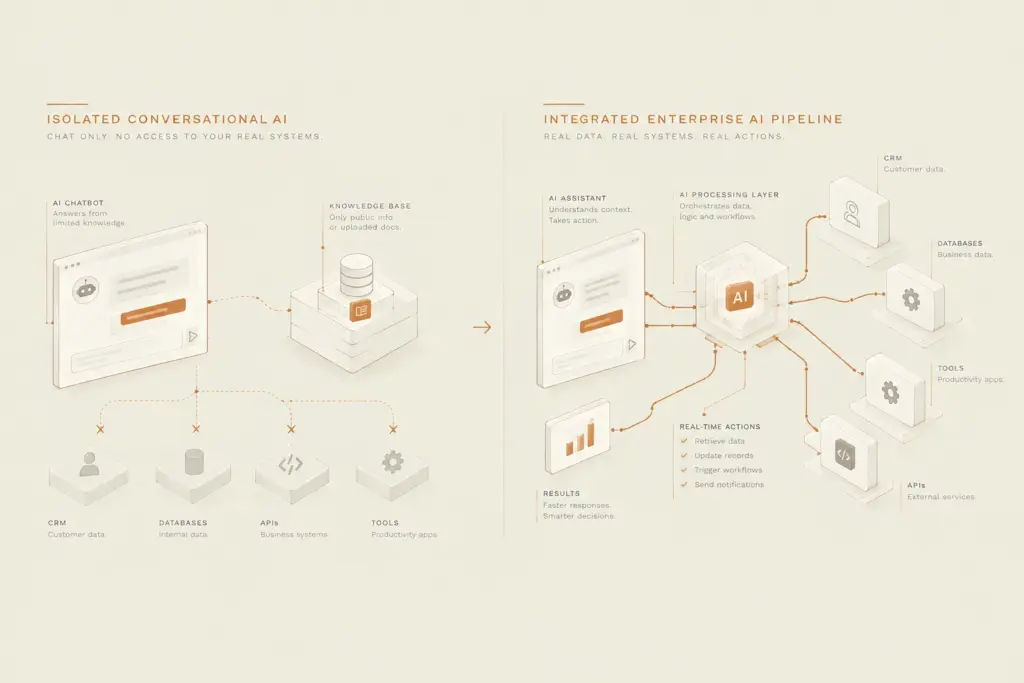
“Enterprise AI maturity isn’t measured by how many employees have a chat tab open—it is measured by how seamlessly AI logic executes inside background operational workflows.”
02 — Pillars of Enterprise AI Workflow Architecture
Designing reliable, business-critical AI pipelines requires robust architecture built around validation, speed, and precision.
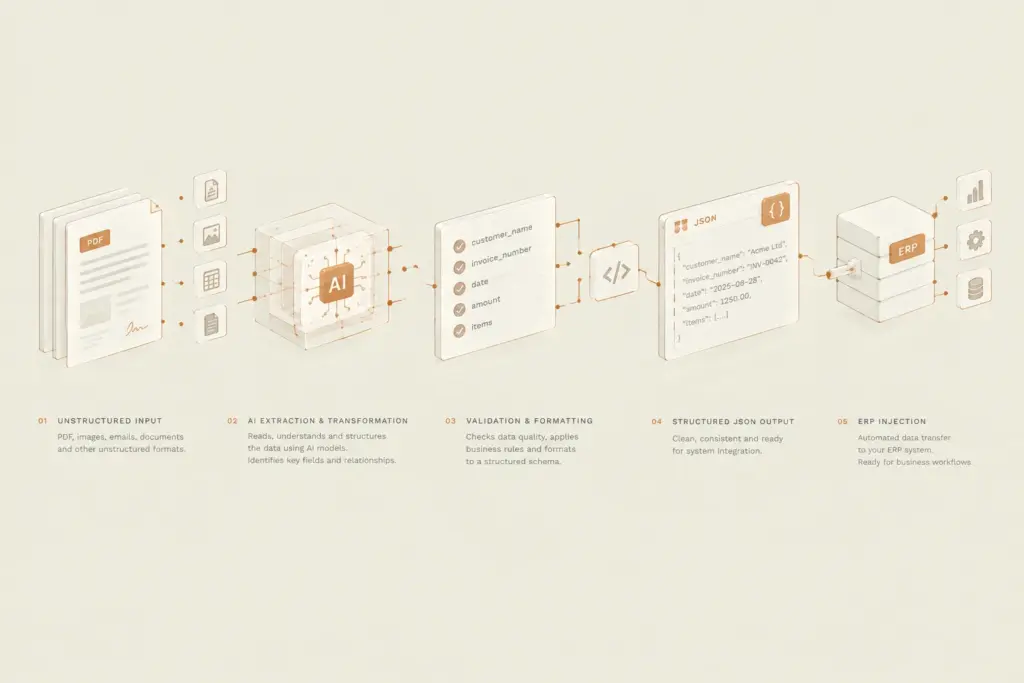
1. Automated Document & Unstructured Data Processing
Convert unstructured invoices, legal contracts, receipts, and client briefs into structured data automatically. AI extraction workflows pull relevant fields, verify data formats, and update target databases instantly.
2. Structured JSON Output & Function Calling
By constraining AI model outputs to strict JSON schemas, enterprises can plug machine intelligence directly into existing APIs, enterprise resource planning (ERP) platforms, and customer relationship management (CRM) systems.
3. Human-in-the-Loop Validation Gates
For high-stakes decisions, practical AI workflows route flag-worthy edge cases to human supervisors for approval before triggering downstream execution, maintaining compliance and oversight.
03 — Operational Impact of Practical AI Automation
Integrating purpose-built AI logic into core enterprise workflows yields rapid, compound returns across operational teams:
- Up to 90% Faster Document Turnaround: Parsing and extracting critical data from long-form documents takes seconds instead of hours.
- Scalable Decision-Making: Automate initial document categorization, lead tiering, and risk scoring without increasing administrative headcount.
- Enhanced Data Accuracy: Multi-layer validation pipelines ensure incoming data adheres strictly to enterprise compliance standards.
04 — Building Your Enterprise AI Roadmap
Deploying AI in the enterprise requires moving beyond superficial chat tools toward deeply integrated operational architecture. By embedding intelligent models into structured workflows, your organization builds an agile operational foundation designed for long-term scalability and competitive advantage.
Transform Your Operations with Custom AI Integration Ready to modernize your backend business processes? Explore our full range of digital development services or see how our custom automation bots and AI solutions can streamline your document workflows, CRM integrations, and decision-making pipelines.